


America’s sun-care market has lengthy trailed behind its world counterparts (particularly Europe and Asia’s expansive SPF improvements), however now, we’re one step nearer to slathering on higher sunscreen. Surprisingly, some excellent news got here out of Washington, D.C. final week: On June 9, the U.S. Meals and Drug Administration (FDA) formally approved bemotrizinol (BEMT) as a permitted sunscreen lively ingredient. It is a main win for stateside SPF followers (and, frankly, anybody with pores and skin), because it marks the primary new addition to the FDA’s over-the-counter sunscreen monograph since 1999.
What’s Bemotrizinol?
BEMT — additionally identified by its commerce identify Tinosorb S — is a broad-spectrum chemical UV filter that protects towards each UVA and UVB radiation. “Certainly one of its most notable traits is that it’s extremely photostable, that means it doesn’t considerably degrade when uncovered to daylight, permitting it to supply constant UV safety all through solar publicity,” Dr. Hadley King, a New York Metropolis-based board-certified dermatologist, tells Fashionista. It might probably additionally “enhance the efficiency of different UV filters when utilized in mixture formulations,” she provides. One other purported profit is low pores and skin absorption. (Some older chemical SPF filters have been discovered within the bloodstream after routine use, spurring demonization inside “clear” magnificence circles.)
BEMT is presently the one chemical sunscreen filter acknowledged by the FDA as GRASE (Usually Acknowledged as Secure and Efficient). Plus, it has been extensively used throughout Europe, Asia and Australia for years in fan-favorite formulations like Bioré’s UV Aqua Rich Watery Essence and Fantastic thing about Joseon’s Relief Sun Aqua Fresh. Put merely, it is “one of the subtle sunscreen filters accessible globally,” per Dr. King.
Related: This Emerging SPF Brand Is Making Mineral Sunscreen ‘Sexy’
As you’ll have guessed from the 27-year hole, getting a sunscreen filter accepted within the U.S. isn’t any small feat. As a result of they’re regulated as over-the-counter drugs within the U.S., they’re required to endure rigorous testing for security and efficacy earlier than receiving governmental approval. International sun-care markets, significantly these in Europe and South Korea, are lightyears forward of the U.S. as a result of they categorize sunscreen as cosmetics, that means there are fewer regulatory hoops to leap by way of. Consequently, world sunscreen formulators have entry to revolutionary (and extra protecting!) filters like bisoctrizole, drometrizole trisiloxane (DT) and terephthalylidene dicamphor sulfonic acid (TDSA).
“For years, dermatologists have identified that American shoppers had entry to fewer UV filters than shoppers in lots of different nations,” Dr. King says. “The addition of BEMT represents a significant step towards modernizing sunscreen choices within the U.S. and inspiring innovation in solar safety.”
Though the secretary of the U.S. Division of Well being and Human Companies (a.ok.a. He Who Shall Not Be Named) might take credit score for this achievement, Swiss diet, well being and sweetness company DSM-Firmenich has spent twenty years and at the very least $18 million in pursuit of BEMT’s FDA approval. BEMT shall be bought underneath the identify Parsol Defend, and DSM-Firmenich owns the unique rights to market the filter within the U.S. for 18 months.
Photograph: Courtesy of Good Climate Pores and skin
What the Approval Means for Manufacturers
However, what does the approval of this new SPF filter imply for the impartial, U.S.-based manufacturers main sun-care improvements? For a lot of, it has been a very long time coming.
“It is about rattling time,” says Dieux Co-Founder and Chief Model Officer Charlotte Palermino. (She’s additionally a content material creator who has been vocal concerning the want for brand new sunscreen choices on her channels.) “Now we have to fast-track approval of the ten+ excellent worldwide filters that are not accepted but however are used internationally to nice success.”
A number of U.S. sun-care manufacturers are welcoming this new SPF filter with open arms. Dieux, a skin-care model identified for its moisturizers, has spent years engaged on its first-ever sunscreen, and BEMT is a part of its formulation course of. “To not give any spoilers, however our favourite model does have the brand new filter,” she teases. Black Girl Sunscreen has been anticipating the brand new ingredient for almost two years and has additionally already began improvement with it, in accordance with Founder Shontay Lundy and Director of Model Growth & Gross sales Dinh Pham.
Australian sun-care model Extremely Violette has been formulating with BEMT since its 2019 launch, which initially sophisticated its enlargement into the U.S. market. “We held off the U.S. launch for so long as we might as a result of we might heard whispers [BEMT] was coming, however finally determined to launch in 2025 with formulations equal to our present vary with out BEMT,” Co-Founder Ava Matthews says. Now, it is full steam forward: Extremely Violette’s in style Fave Fluid and Queen Screen formulations will launch within the U.S. in 2027. Within the meantime, it is getting ready for 3 BEMT formulation to land at Sephora U.S. inside the subsequent six months, with the primary (an SPF designed for acne-prone pores and skin) hitting cabinets in September. It is also price noting that Extremely Violette recalled one among its mineral SPF formulations final yr after discovering atypical variability in its SPF ranges. (Extra on that in a second.)
Photograph: Courtesy of By the Seaside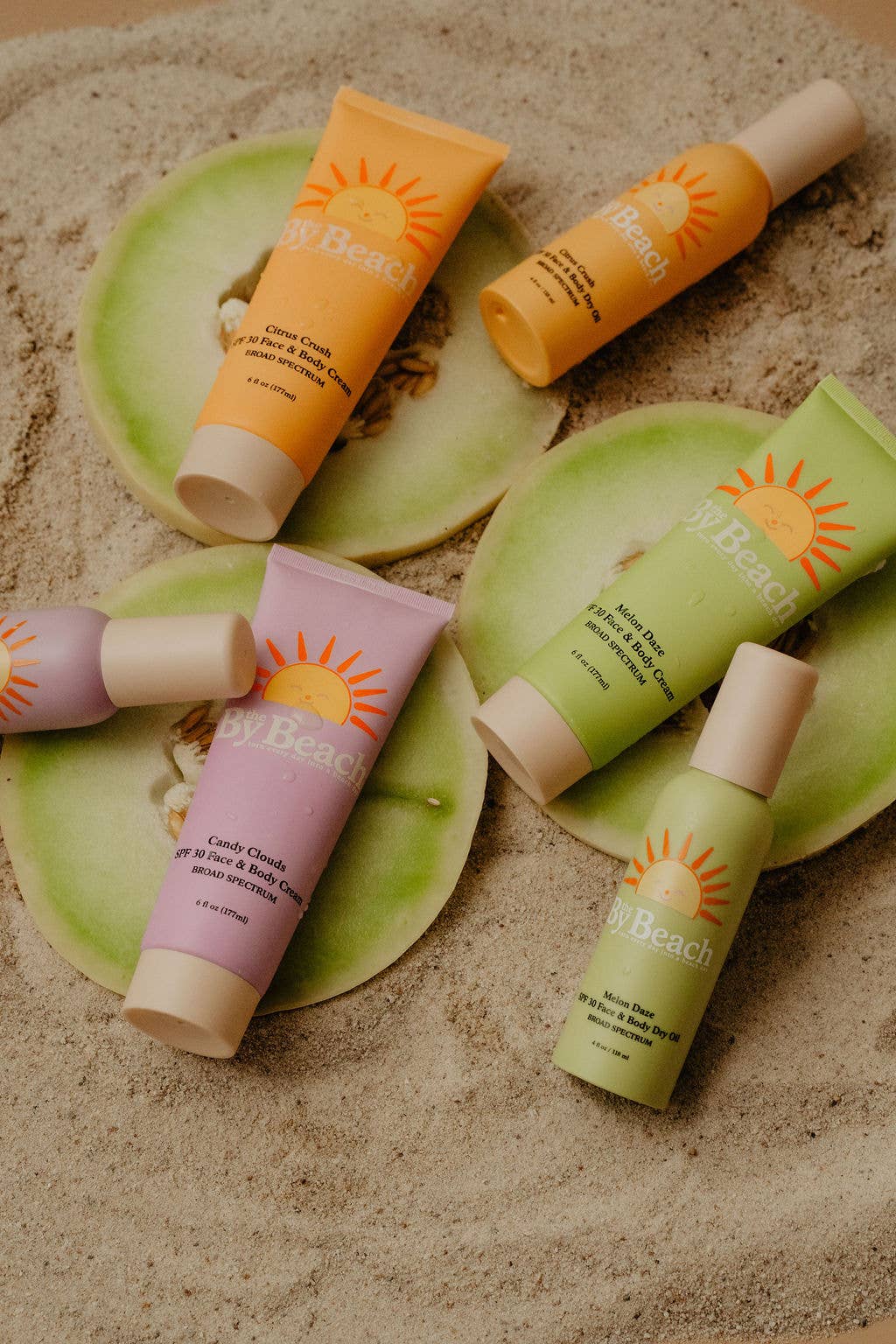
Sensorial SPF model By the Beach‘s Co-Founder Andrew Glass notes that the corporate is open to exploring the brand new filter in future formulations after finishing the right testing. “For indie manufacturers, that opens the door to extra elegant textures, decrease perceived greasiness and doubtlessly much less reliance on heavier filter methods,” he says.
Good Weather Skin, a mineral-focused SPF model, is curious: “We’re anchored in non-nano zinc oxide, and we’re not transferring away from that with out good cause, however we have now lively conversations occurring with our chemists, and we’re inquisitive about what this approval may make attainable,” Co-Founders Alexandra Spunt and Franchesca Hashim share. Dune Suncare can be “approaching [BEMT] with curiosity relatively than urgency,” Co-Founder Emily Doyle says, because the model needs to “be taught extra about how this lively performs inside the particular parameters of our formulation earlier than making any hasty selections.”
Related: The Rising Makeup Brand Putting Sunscreen in All Its Products
The Security Discourse
As U.S. sun-care manufacturers look to include BEMT into their merchandise, Palermino factors out that “there have been many scandals involving sunscreen producers advertising SPF values effectively above what they really comprise within the bottle,” noting that the problem “seems to disproportionately influence mineral sunscreens.” In Australia final yr, regulators found that many sunscreens delivered safety far wanting their marketed SPF, together with Extremely Violette’s Lean Display screen SPF 50+ that confirmed inconsistent mineral SPF ranges in impartial testing. (Extremely Violette subsequently recalled all batches of Lean Display screen, and a “next-generation” iteration is now within the works.)
“My hope is that, with BEMT, manufacturers will transfer away from the dangerous and unhelpful ‘100% mineral sunscreen’ positioning and as an alternative make formulation that leverage BEMT, which has sturdy security information,” Palermino continues.
In in the present day’s panorama of sunscreen misinformation (particularly the “clear” magnificence motion’s ill-informed abhorrence of chemical SPFs and common anti-SPF propaganda), Glass flags that shopper reactions to a brand new chemical filter might differ. “Indie manufacturers will want clear messaging that explains advantages with out creating worry round present accepted sunscreen substances,” he advises. In spite of everything, we are able to spend days splitting hairs about which SPF filters reign supreme, however the indie SPF manufacturers (and derms!) we consulted agree: The very best sunscreen is all the time the sunscreen you will really put on on daily basis.
Photograph: Courtesy of Extremely Violette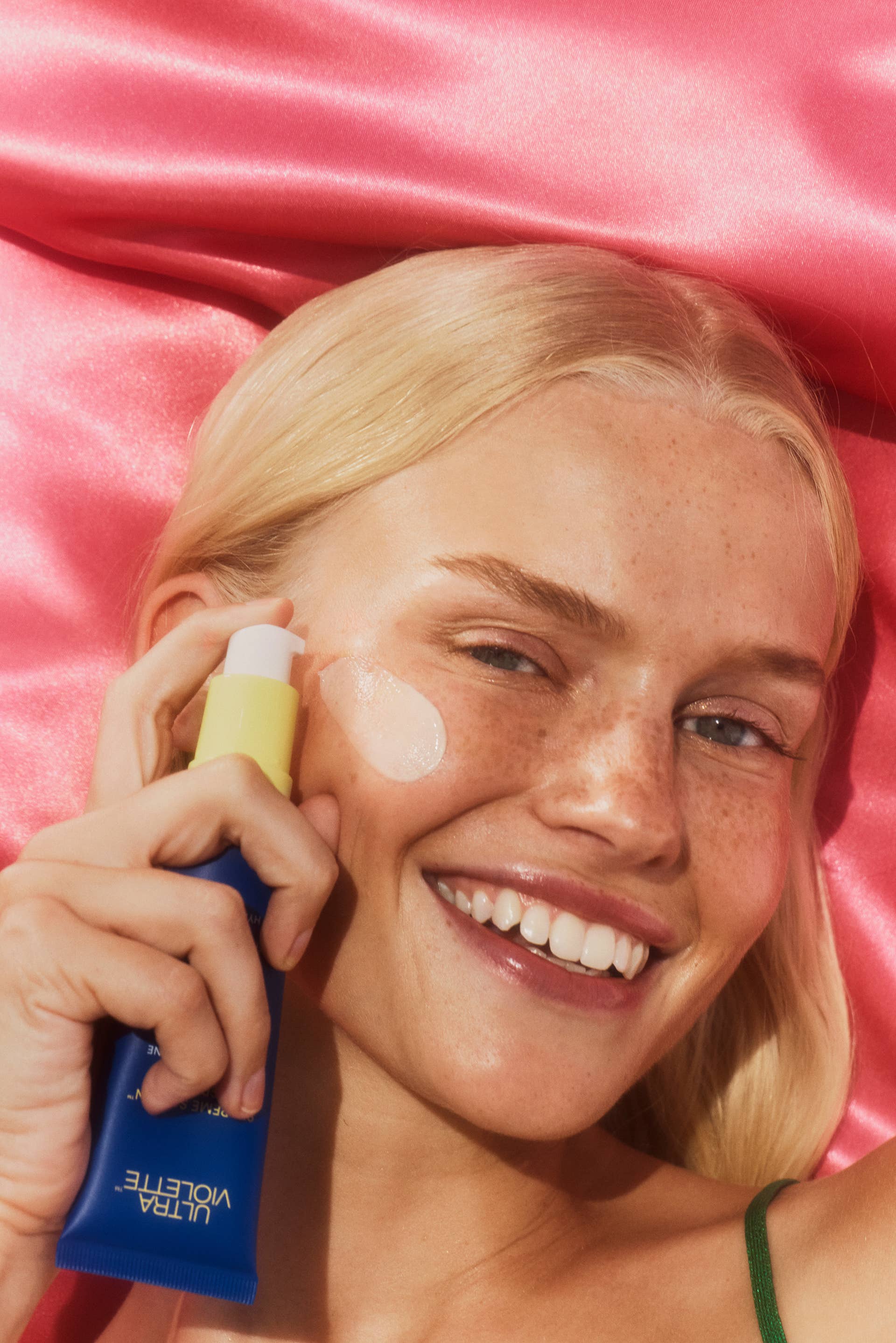
The Way forward for BEMT-Powered Sunscreen
Specifics on BEMT’s pricing and entry stay unclear, posing a possible monetary complication for impartial manufacturers. As Lundy and Pham level out, indie labels face “numerous upfront R&D value with testing and validation which may be difficult for smaller manufacturers in comparison with legacy manufacturers.” Doyle concurs: “These assets are finite — so the bar for ‘why this, why now’ must be excessive.” In response to Matthews, BEMT “is dearer than the standard chemical UV filters,” so indie manufacturers might must account for a spike in value of products, particularly in the event that they’re remodeling an present product or ranging from scratch.
The primary U.S. sunscreen formulation with BEMT are anticipated to be stocked in shops as early as this September, however that timeline could also be longer for indie sun-care manufacturers. Nonetheless, BEMT’s FDA approval is a (uncommon) second of progress, placing the U.S. one step nearer to leveling the sunscreen taking part in area.
“Individuals have been ready a very long time for entry to newer sunscreen expertise,”
Seattle-based board-certified dermatologist Dr. Heather Rogers says. “Shoppers ought to know that they needn’t throw out their present sunscreen, however they will look ahead to seeing merchandise formulated with this ingredient within the U.S. market.”
Please word: Sometimes, we use affiliate hyperlinks on our web site. This by no means impacts our editorial decision-making.
