

For those who contemplate your self a vogue fanatic, end up watching styling movies or save a put up that includes an intriguing pair of shorts to lookup later, the chances of you coming throughout “area of interest cool-girl” type movies are fairly doubtless.
Trend movies promising to show viewers to “area of interest,” “underrated,” “cool-girl” manufacturers have flooded the feeds and are gaining traction, notably throughout Instagram and TikTok. They converse to a current evolution away from these fleeting trends that require prompt participation earlier than dying at week’s finish. Now, individuals are looking for a visually interesting type that speaks to them and gives a semblance of individuality. It is for that cause that these “area of interest cool-girl manufacturers” movies are inclined to do effectively and catch the attention of the fashion-curious.
Mia Jacobs, senior strategist for youth vogue at development forecasting agency WGSN, believes “we’ve moved previous the period of micro-trends and core aesthetics and entered a interval of hyper-individuality, the place the main target is on growing private type.” She continues: “Area of interest is the brand new norm for Gen Z; they’re prioritizing authenticity and ‘IYKYK’ (if you realize, you realize) tradition to sign neighborhood and private values.”
This video format is how Yagmur Tok discovered her digital footing. The author-turned-creative strategist-turned-content creator started by specializing in “underrated Turkish cool-girl manufacturers” to platform designers from her dwelling nation. After seeing how her viewers responded, she expanded to different unbiased and vintage manufacturers she deemed area of interest or underrated. “Persons are sick of purchasing on the similar 5 shitty locations and shopping for the identical issues,” she tells Fashionista.
Being the themes of those movies is kind of an fascinating expertise, in response to designers like Leeann Huang and Ella Mae, each house owners of eponymous unbiased labels dubbed as “area of interest” or “cool woman” by voices on the web.
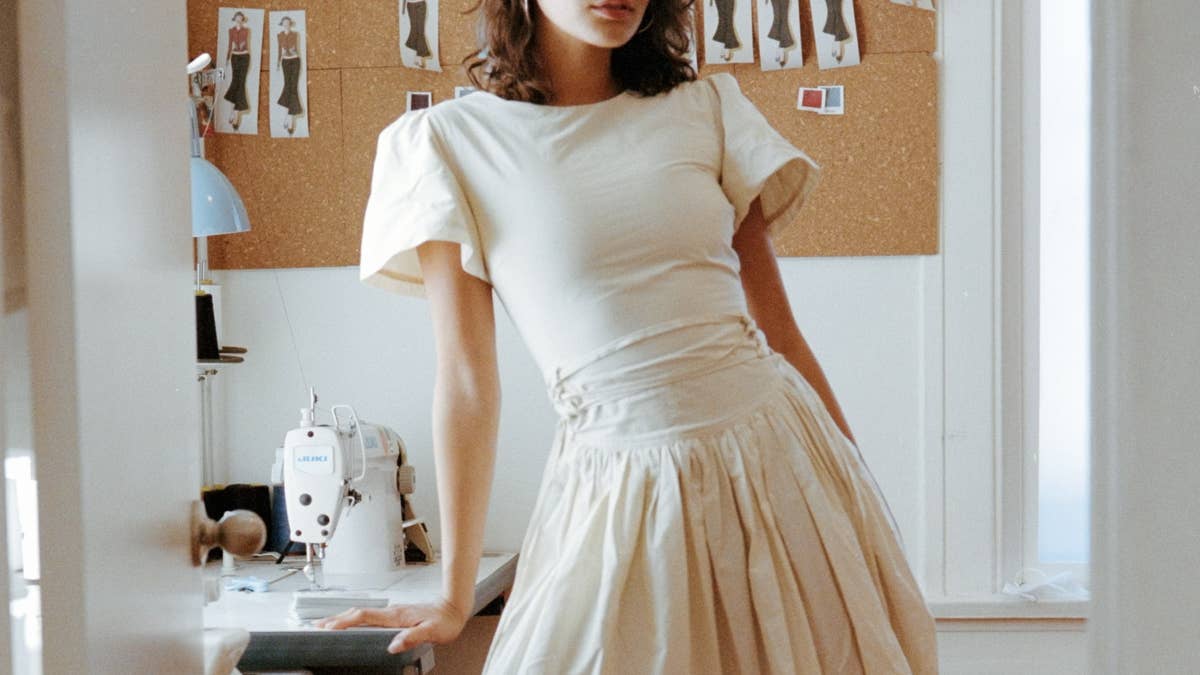
Mae tries to restrict social media use in her private life, however she’s fairly acquainted with it as a model proprietor. She was launched to this development after being tagged in varied movies of the kind. “Sustainable,” “L.A.-based,” and “whimsical” are the descriptors mostly related together with her model inside the “cool-girl” umbrella. “I am comfortable to be talked about and included, and I do hope they’re genuinely useful for individuals too, who’re looking for a purchasing area of interest,” she says.
The movies she’s most thrilled to be featured in are the “sustainable” cool woman ones, as they affirm that individuals are pondering consciously about their purchasing habits — “as a result of then individuals are doing one thing good, even when it is only for the sake of the development,” she says.
Photograph: Ella Mae
Fellow Los Angeles-based designer Huang is used to seeing any such content material and believes it’s consistent with the rise of faster, short-format info spreading. “Persons are hungry to be taught this stuff, nevertheless it’s tougher, consideration span-wise, these days to should learn by a web based article,” she says. “It is enjoyable when individuals study my model, and it is fascinating to listen to what they should say. I do assume they’re pushing me out to their viewers, which is at all times useful.”
When formatting this content material, Tok goals to strike a steadiness between curation and schooling. Her aim is to individuals uncover the place to go for his or her specific pursuits and educating them on bigger vogue matters — comparable to runway reveals and traits — with out explicitly telling them to “purchase this outfit” or “put on this high.”
Tok and the designers see these curated movies as one resolution to the overwhelm the digital sphere can invoke. With social feeds that may really feel overpolluted, it may be useful to have influencers do the analysis to uncover hidden gems, whatever the topic. In addition they consider extra customers would store at smaller manufacturers in the event that they knew the place to search out them. Tok says fairly candidly, “No person is aware of what the hell they’re doing [including myself at times], and there’s a lot strain for ladies and a whole lot of noise from random individuals.”
As Mae provides, “the content material machine by no means stops,” so having parameters to go off of — whereas nonetheless feeling a way of autonomy to discover — can present the reduction many are looking for. “There’s an aspirational piece to the cool woman,” Tok says. “Like, ‘if I purchase this, then I may very well be a greater model of myself.’”
Inspecting client behaviors and needs additional, Jacobs says the recognition of this development factors to a few components. First, “the web vogue neighborhood is shifting from passive consumption to extra lively curation, the place the main target is on constructing a wardrobe that displays authenticity and self-expression somewhat than inflexible type guidelines,” she explains. Second, “customers additionally need to be a part of a designer’s journey or ‘fandom’ somewhat than simply an finish person, which ends up in stronger model affinity for unbiased labels.” And at last, “in an AI-saturated panorama, we’re seeing a renewed reverence for human craftsmanship and the transparency of sluggish vogue — understanding precisely who made your garments is changing into a standing image.”
Jacobs notes that development forecasters are seeing the rise of “anti-algorithm dressing,” which rebukes generic types primed for AI replication, in addition to “low-consumption” and “de-influencing” traits that search to advertise “high-quality, versatile items with long-term attraction whereas additionally encouraging customers to hunt out distinctive objects that set their wardrobes aside.” This marks a major departure from the “purchase now” content material on the opposite aspect of those apps.
Tok shares that, each anecdotally and thru direct numbers, she has seen her viewers choose into purchasing classic manufacturers and indie labels, versus the acquainted fast-fashion conglomerates.
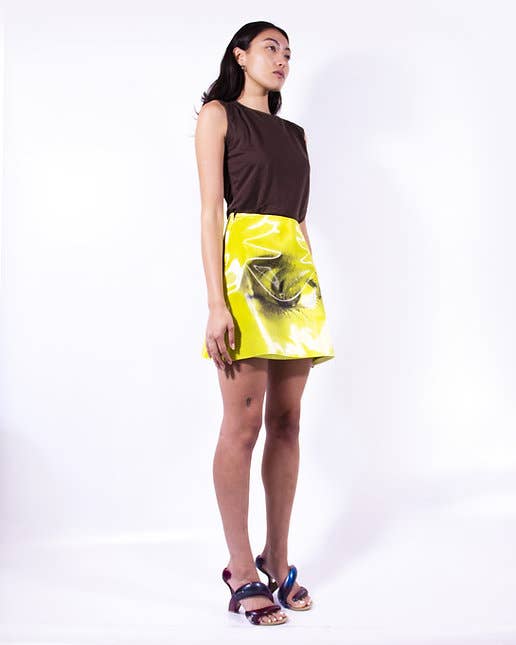
When unbiased designers are featured in a viral “cool-girl” type video, they on the very least expertise a lift in publicity. “I undoubtedly assume key phrases like ‘this cool area of interest model’ rings in individuals’s minds and will get their consideration,” Huang says. Whereas the upper value level of their slow-produced clothes could result in a slower buyer buy-in, the publicity broadens their viewers and ultimately results in extra gross sales. Huang and Mae each verify that there are particular items that proceed to promote out attributable to this on-line virality. They’ve now turn out to be recognizable markers for his or her manufacturers. (For instance, the Monday costume in Ivory and Twisting Vines skirt for Ella Mae, and Fruit Sticker Baggage or Blinking Eye skirts for Leeann Huang).
Photograph: Courtesy of Leeann Huang
When Huang first launched the Blinking Eye skirt, she knew she had one thing particular, but the models priced at $330 every weren’t promoting. Then got here the viral video showcasing how cool and distinctive they had been, and he or she offered 35 skirts, resulting in roughly thrice the income from the month prior.
Seeing what resonates with content material creators’ audiences, in addition to their very own natural ones, additionally permits designers to know which audiences their work resonates with. For 2 SoCal-based unbiased manufacturers, social media is the central avenue by which their designs are in a position to attain locations comparable to New York, San Francisco, London, Japan and Australia. It has created alternatives that will not have been attainable with out the capital or basis wanted to climate the standard, usually gatekept vogue trade. Whereas this enlargement in client base will also be attributed to their very own advertising and marketing efforts and conventional press, the sheer impression of social media is simple.
Tok is ready to observe the tangible results her content material has on manufacturers by the ShopMy platform. 1000’s of clicks, followers, sold-out objects and a whole lot of {dollars} in affiliate fee might be attributed to her highlighting a model and linking it on the platform. To that time, she can not stress sufficient how priceless she believes ShopMy might be for unbiased designers right now.
“It is superior to uplift these designers,” she says. “I attempt to share Turkish designers, Palestinian designers, a whole lot of designers from the Center East, Africa and Europe. I need to [uplift] perspective, high quality and craft.”
There are limitations to these kinds of movies, nonetheless, which makes Tok really feel conflicted at occasions. The worth level for one is usually a deterrent to her viewers, who could both expertise financial constraints or, attributable to fast fashion, at the moment are woefully unaware of the true value of moral clothes manufacturing. Secondly, and extra conflicting, is the restricted sizing many, however notably classic area of interest manufacturers, carry.
Huang highlights how troublesome — and sometimes deal-breaking — it may be for model house owners who can not fairly grasp the idea of “always-on” social media tradition. In the meantime, Mae shares that establishing legitimacy amid the web noise is usually a problem. Although social media supplies an equal platform, it may possibly blur the traces between established companies and DIY creators, prompting customers to consider they will replicate designs somewhat than spend money on the manufacturers themselves. “Do you promote the patterns for this? I need to make my very own,” is an actual query Mae receives relating to her designs.
In an analogous vein, social virality could make unbiased designers extra vulnerable to fast-fashion dupes; whereas dupes have an effect on manufacturers in any respect ranges, they are often particularly damaging to smaller designers that lack the notoriety, assist or funding of bigger luxury labels.
“It’s a fragile steadiness,” Jacobs notes. “Viral publicity can create a sudden surge in orders that may overwhelm a small model’s infrastructure, manufacturing capabilities or inventory ranges, and might be much more difficult relying on the model’s geographical location.”
Whereas supporting unbiased manufacturers takes a multi-tiered strategy, all events agree there’s a rising want for vogue with a extra private contact, and “cool-girl” branding may be the intelligent advertising and marketing angle wanted to hold this shift ahead.
