

Right this moment, most would agree that high quality clothes must be accessible to all, reasonably than a privilege afforded completely to the elite. A century in the past, nevertheless, issues had been completely different. Enter Elizabeth Hawes, a radical designer, critic, creator and political advocate who famously sought to democratize trend, and lived by the philosophy that clothes is a direct expression of the self.
Hawes, who ran her personal couture home, proposed strategies to develop high quality mass manufacturing (which might not enter the mainstream till the Sixties) on U.S. soil, all the way in which again within the Twenties. She’s also known as one of many first American couturiers, and but she stays a hidden determine in trend historical past — till now, a minimum of: The Cincinnati Artwork Museum is placing the highlight on Hawes’ work with a brand new exhibit, “Elizabeth Hawes: Radical American Trend.”
When Hawes started designing, Parisian trend largely influenced American costume. The truth is, Hawes truly bought her begin within the trade as a “paid covert copyist for U.S. shops spying on French fashions,” explains Megan Nauer, appearing curator of The Cincinnati Artwork Museum’s Trend Arts and Textiles division. “She got here to the conviction that American ladies (and males) deserved a uniquely American viewpoint addressing a modernizing lifestyle, and that she wished to develop that right here within the States.”
Operating from April 24 via August 2, the brand new exhibition options greater than 50 clothes made between the Twenties and Sixties, alongside authentic sketches and illustrations, and is accompanied by the primary publication devoted fully to Hawes’ profession.
Forward, Naurer sheds extra gentle on Hawes’ legacy, placing the exhibit collectively, sourcing clothes and extra.
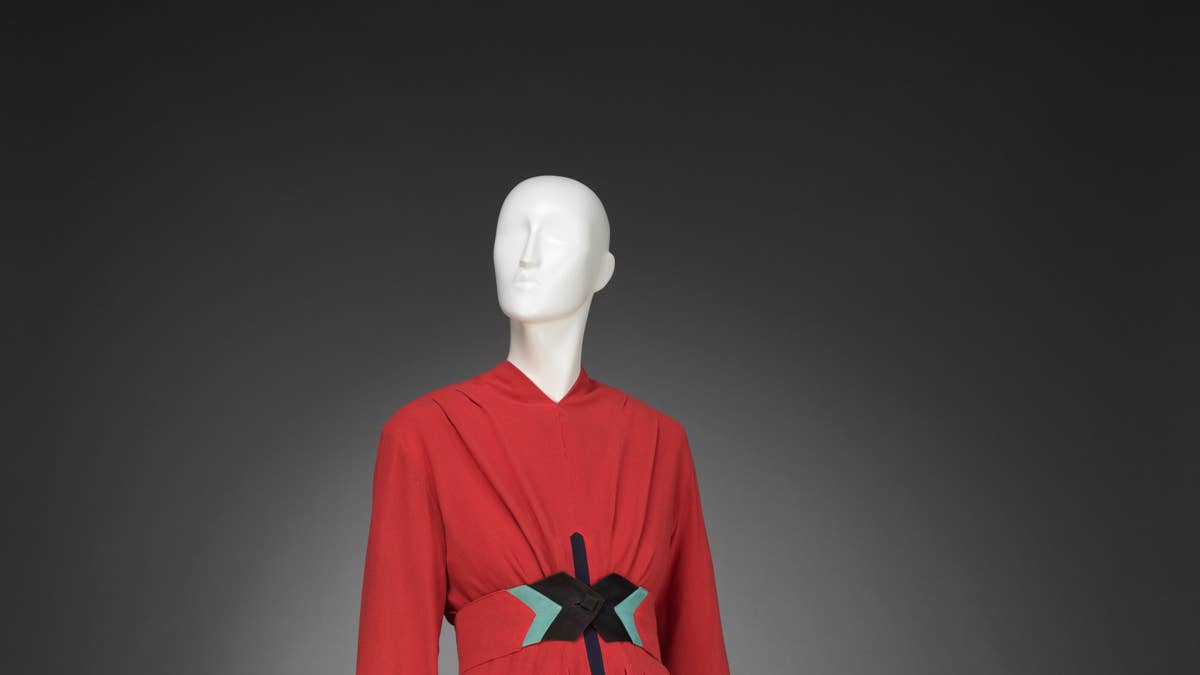
Elizabeth Hawes (American,1903 – 1971), Day Gown and Belt,Thirties, wool, leather-based, from the gathering of Dorette Okay. Fleischmann, reward of her daughter, Joan F. Tobin and her granddaughter, Alexis Dorette Tobin, 19/20.22:22
Picture: Courtesy of Cincinnati Artwork Museum
What had been Elizabeth’s greatest contributions to American trend?
She wished to create clothes that had been lovely, made with high quality, utilitarian and cozy. Earlier than this time, ladies — ladies specifically however males as effectively, Hawes argued — had been anticipated to put on garments that usually confined their our bodies and conformed their figures: Hawes and her affect had been an enormous a part of the transfer away from that towards a higher aesthetic and bodily freedom in costume for girls within the U.S.
She additionally argued that every one genders wanted the identical issues from their garments, and that gendered norms of costume weren’t helpful: as an illustration, that girls ought to put on trousers and males ought to put on skirts when the calls for of their lives known as for one over the opposite — she was very ahead pondering in her therapy of gender in trend.
She additionally wished to democratize entry to high quality clothes: she was very involved in methods to work with producers and wholesalers to create clothes of true high quality and sturdiness which could possibly be made moderately inexpensive to folks on a working class revenue. This concept of high quality, inexpensive clothes made right here within the U.S. is a dialog we’re culturally revisiting as we speak.
Elizabeth Hawes (American, 1903 – 71), Day Gown and Hat, 1939, silk, linen, Cincinnati Artwork Museum, Reward of Dorette Kruse Fleischmann in reminiscence of Julius Fleischmann, 1991.218. Picture: Rob Deslongchamp/Courtesy of Cincinnati Artwork Museum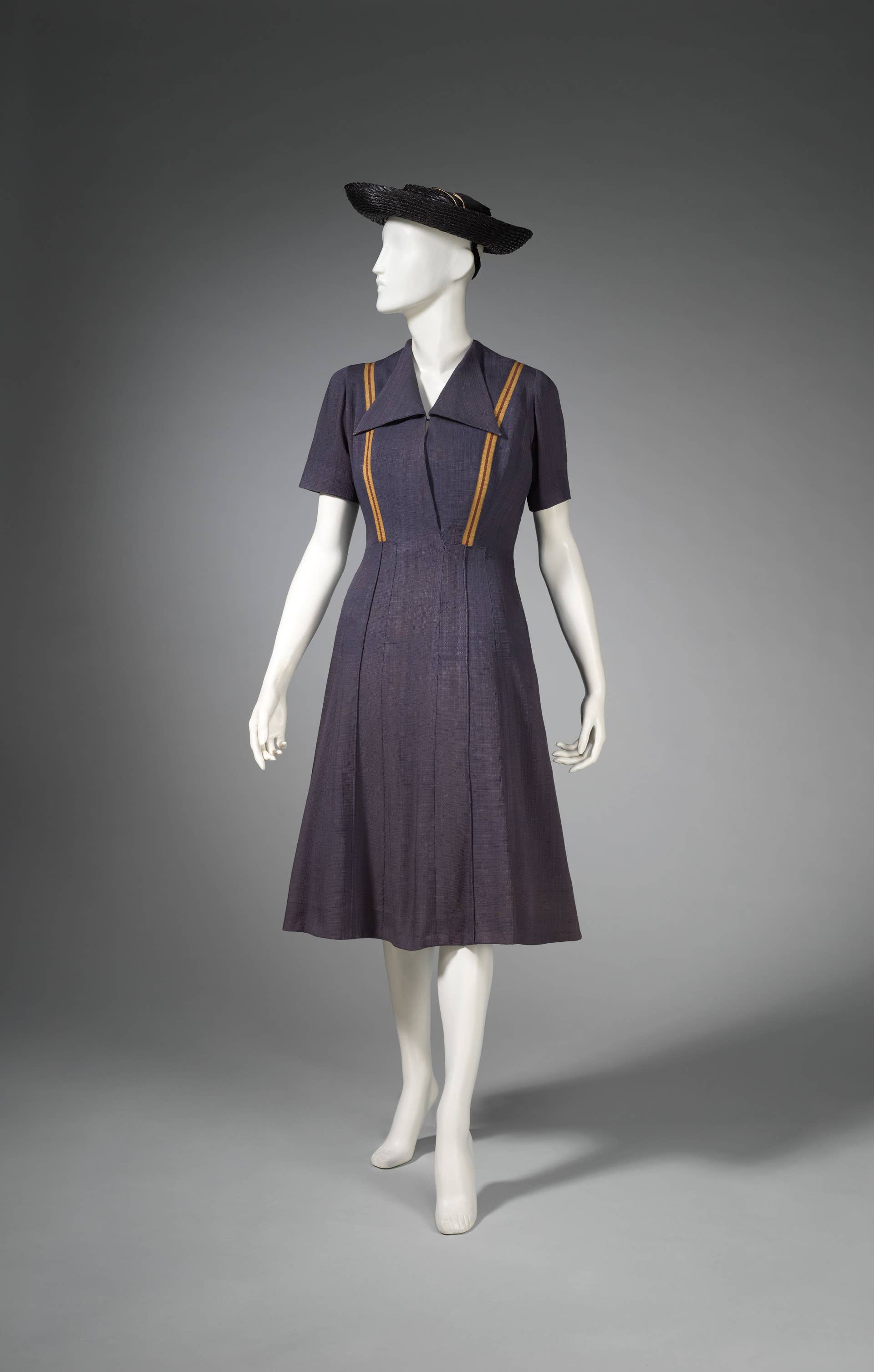
Stroll me via the method of placing the exhibit collectively: How lengthy did it take? What analysis did you must do? The place did you supply the clothes and different works?
The exhibition and accompanying e book had been a long-term labor of dedication for the curator, Cynthia Amneus, who retired in January. Cynthia researched this designer on and off for nearly twenty years, finally conducting intensive primary-source analysis within the designer’s private archives and different archives throughout the nation.
A lot of the clothes within the exhibition are a part of the Cincinnati Artwork Museum’s everlasting assortment. CAM has the second-largest assortment of Hawes’s work after the Costume Institute on the Met. A Cincinnatian named Dorette Kruse Fleischmann was a long-term, devoted consumer of Hawes, finally changing into a stockholder in her operation. Dorette was a collector of trend and donated the vast majority of CAM’s assortment of the designer’s work, together with many different artworks through the years.
Some clothes are on mortgage from the Met, and a choice of the designer’s authentic sketches are on mortgage from the Brooklyn Museum Library and Archives. Different gadgets are on mortgage from the Museum at FIT, The Museum of the Metropolis of New York, Kent State College Museum, the Indianapolis Museum of Artwork and the Wadsworth Atheneum Museum of Artwork.
Picture: Rob Deslongchamps/Courtesy of Cincinnati Artwork Museum
What are some standout items you wish to spotlight?
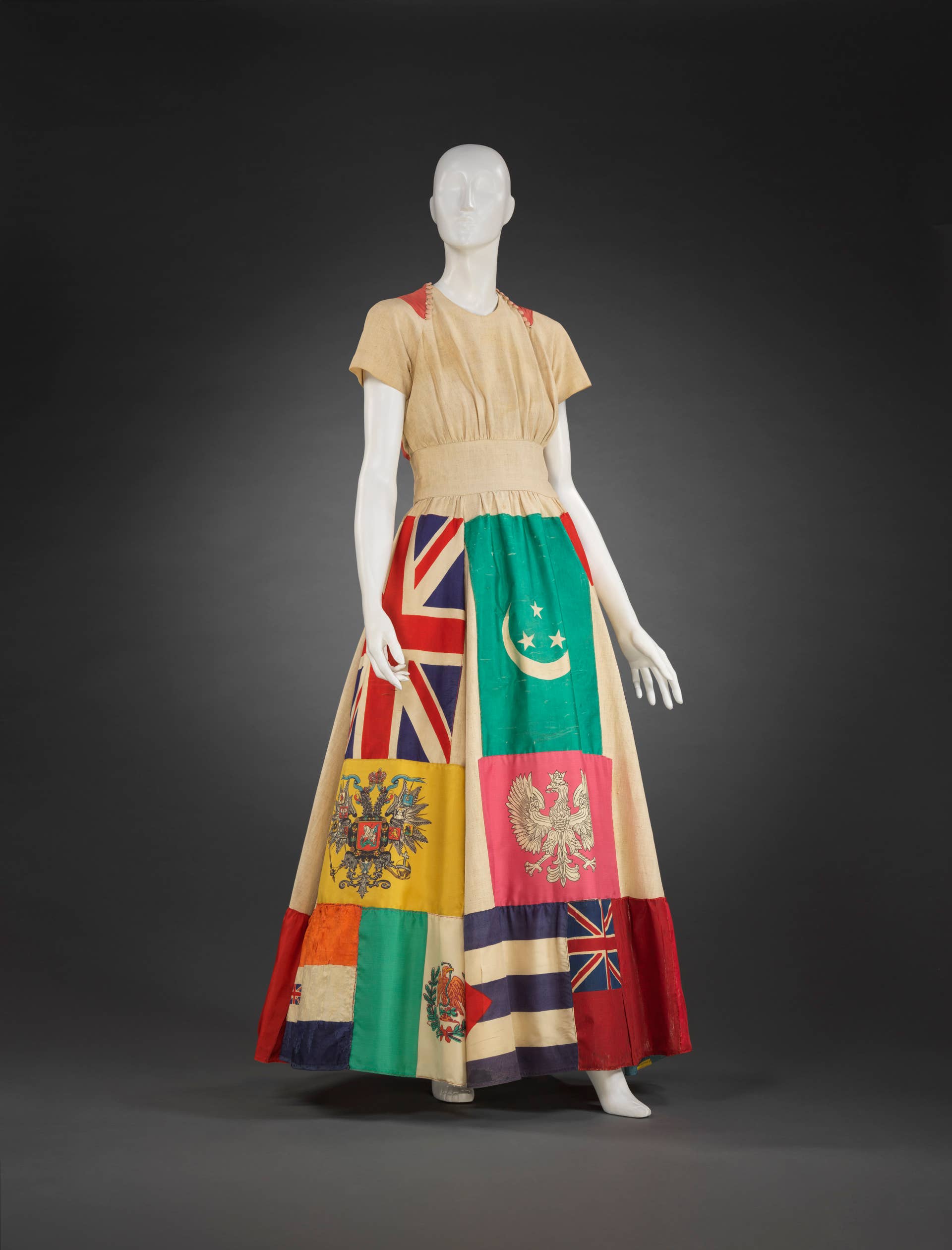
The costume titled“Geographic” (above) is a standout piece: In 1940, because the world and the USA headed into World Struggle II, everybody within the manufacturing sector and past within the States was enthusiastic about how they’d adapt and contribute in the course of the warfare. Hawes knew that she must shut her atelier. She designed a ultimate assortment to current at her salon in 1940, giving each ensemble within the assortment a reputation with a geopolitical theme. The week of the style present, she sketched and determined to make “Geographic” for herself to put on to shut the present and shut her home.
She bought flags from retailers across the metropolis. The complete-skirted full-length costume has flags of nations that had been Allied powers or impartial on the time stitched right into a patchwork over the skirt and bodice. On the derriere of the skirt, the place the wearer would sit down on them, she stitched three small flags of Nazi Germany and the Axis powers. This piece was her political assertion and final phrase as she closed the home she had run in New York for a decade. It’s one among one, made just for the designer to put on herself.
The costume arrived at us through a set switch from the Brooklyn Museum in 2011, in very tough situation. Our wonderful Textile Conservator at CAM, Chandra Obie Linn, did some wonderful work to stabilize this historic piece.
I’ve a sense that for a few years, her progressive political views and her unflinching, typically caustic voice…had been a part of why the style trade did not uphold her legacy because it did for different designers.
Why do you suppose Elizabeth has been an neglected determine in trend historical past?
That is onerous to say! Many artists fall out and in of the widespread public consciousness throughout or after their lifetime. I’ve a sense that for a few years, her progressive political views and her unflinching, typically caustic voice, which permeated her big physique of writing and commentary, had been a part of why the style trade did not uphold her legacy because it did for different designers. Her critiques of the style trade, although, are ones we face as we speak, and I believe as they turn into a extra urgent a part of the social dialog, Hawes’ work is being picked again up and appears extra insightful than ever.
How does this exhibit honor Elizabeth’s legacy?
The exhibition honors her voice and options a few of her most technically attention-grabbing, lovely designs. Hawes cared about every little thing she made and all of her shoppers, however due to the size and closeness of her relationship with Dorette Kruse Fleischmann, she achieved a few of her most gorgeous and private designs of their work collectively.
