

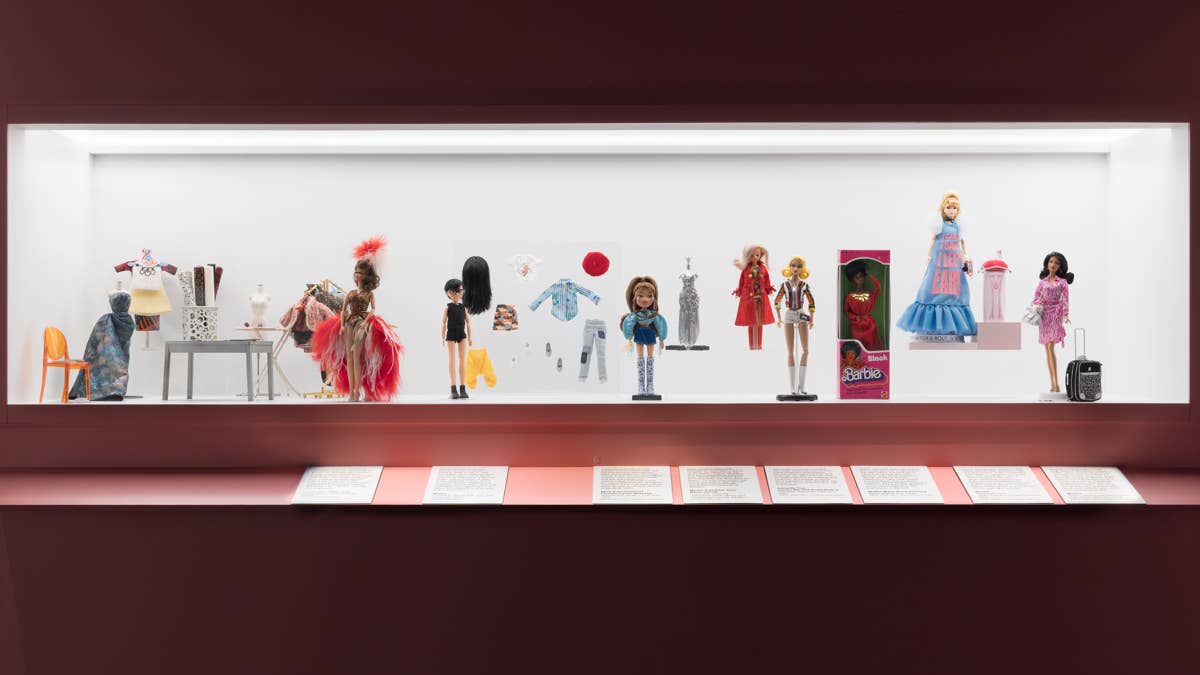
It’s no secret that dolls have had a significant affect on the style world, with Loewe’s cartoonish foam pumps and Marc Jacobs’ dramatically proportioned clothes being simply a few latest examples. In the meantime, trendy collectible figurines like Barbie, Bratz and Polly Pocket are among the many business’s busiest collaborators. All of it stems from the longstanding phenomenon of “doll dressing.”
Coined by the Museum at FIT’s Senior Curator Dr. Colleen Hill, the phrase describes clothes, equipment, hair and make-up that draw inspiration from dolls, an idea that dates again centuries. Now, with the establishment’s newest exhibit — additionally titled “Doll Dressing” — this topic is explored in depth for the very first time.
Picture: Courtesy of The Museum at FIT
“I by no means actually needed to do an exhibition that was solely on vogue dolls, partly as a result of that’s been completed and completed very effectively,” Dr. Hill informed Fashionista throughout a preview. “I began fascinated about this concept of the dwelling doll, and the way that might transcend one thing vapid to turn out to be one thing agentic.”
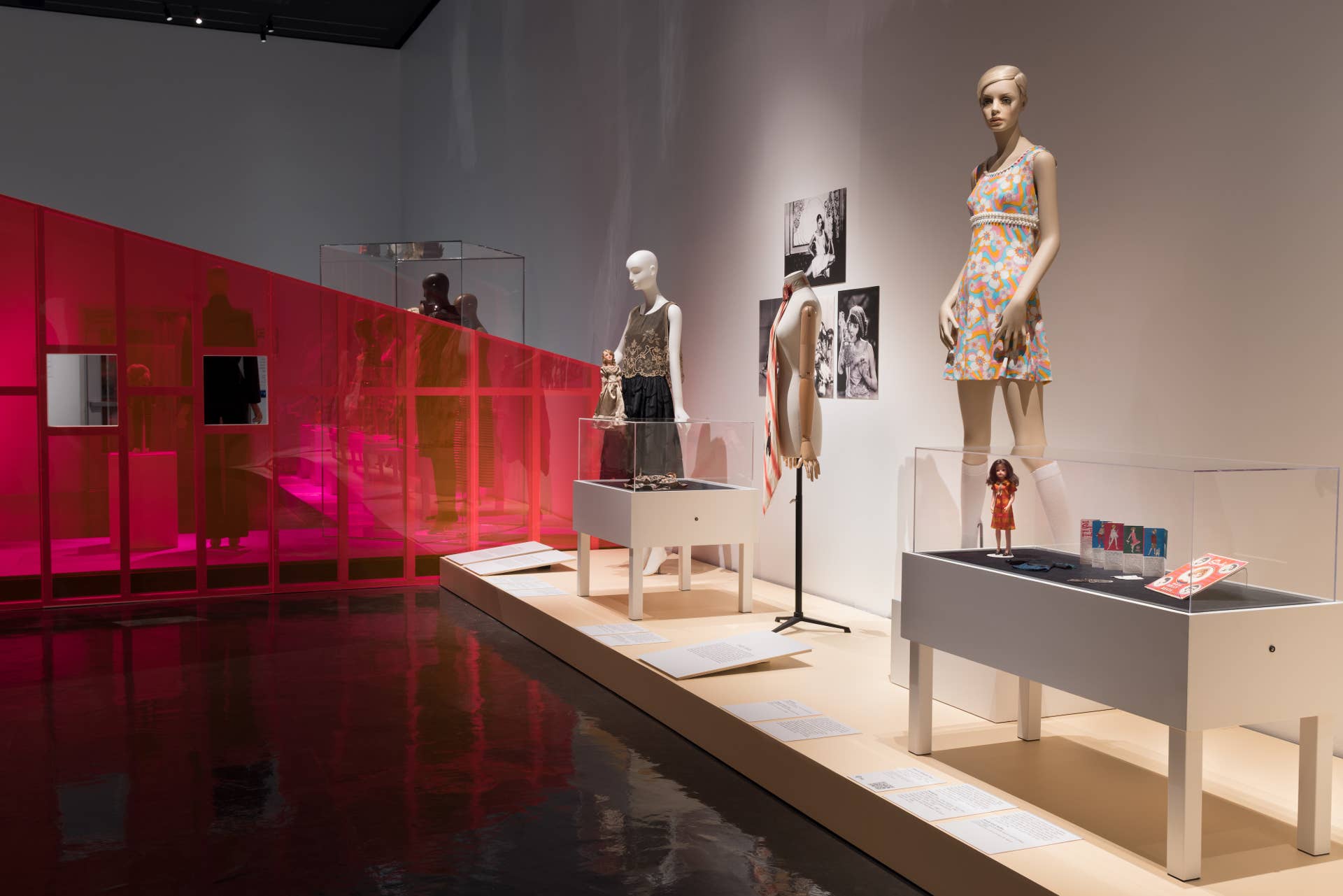
Aesthetic-focused subcultures such because the dolly birds of the Nineteen Sixties or the Japanese Lolita, which emerged within the Nineties, are prime examples of this. Each kinds of costume borrow closely from doll aesthetics and concurrently allowed ladies to specific themselves in methods they hadn’t earlier than: The ruffles and frills of a Lolita frock subverted expectations of uniformity, whereas entrepreneurs like Twiggy and Biba’s Barbara Hulanicki flipped the derogatory origins of the time period “dolly chicken” on its head by constructing profitable manufacturers at a time when ladies had been nonetheless anticipated to turn out to be housewives.
Picture: Courtesy of The Museum at FIT
In fact, there’s no scarcity of precise vogue dolls featured within the exhibition. Britain’s Sindy and Japan’s Jenny are two worldwide examples, and designer collaborations with Barbie, Blythe and Monster Excessive additionally make appearances. Toys like these additionally acted because the earliest mannequins for acclaimed couturiers like Martin Margiela, Anna Sui and Jason Wu, who received their begin by making garments for his or her childhood dolls.
“So many designers start fascinated about clothes by making issues in miniature. Dolls can be found to them, scraps of cloth can be found. It’s a solution to begin fascinated about the physique and fascinated about design,” Dr. Hill stated.
Picture: Courtesy of The Museum at FIT
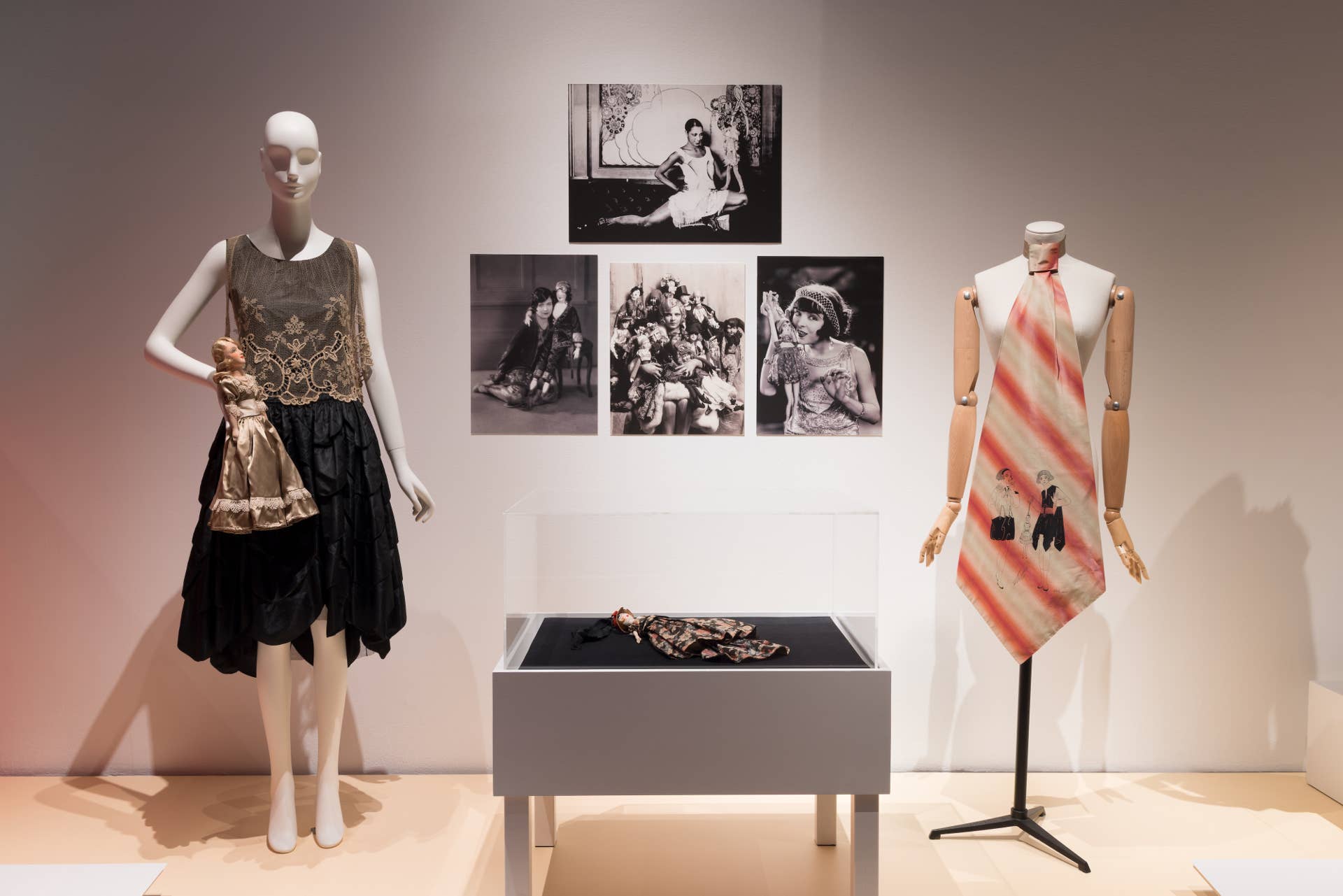
Some designers have even labored dolls into their collections. Lengthy earlier than Labubus grew to become coveted equipment, Paul Poiret popularized the boudoir doll within the early twentieth century, dressing them in appears to be like that coordinated along with his life-size designs.
“They had been like little equipment or mascots,” Dr. Hill defined. “It was an actual development throughout the Twenties to simply exit for the night together with your doll by your facet. For essentially the most half, they’re not purposeful. There are a couple of luggage — I’ve one within the present that’s formed like a doll, and its skirt conceals a bit purse — however often, you simply carried a doll.”
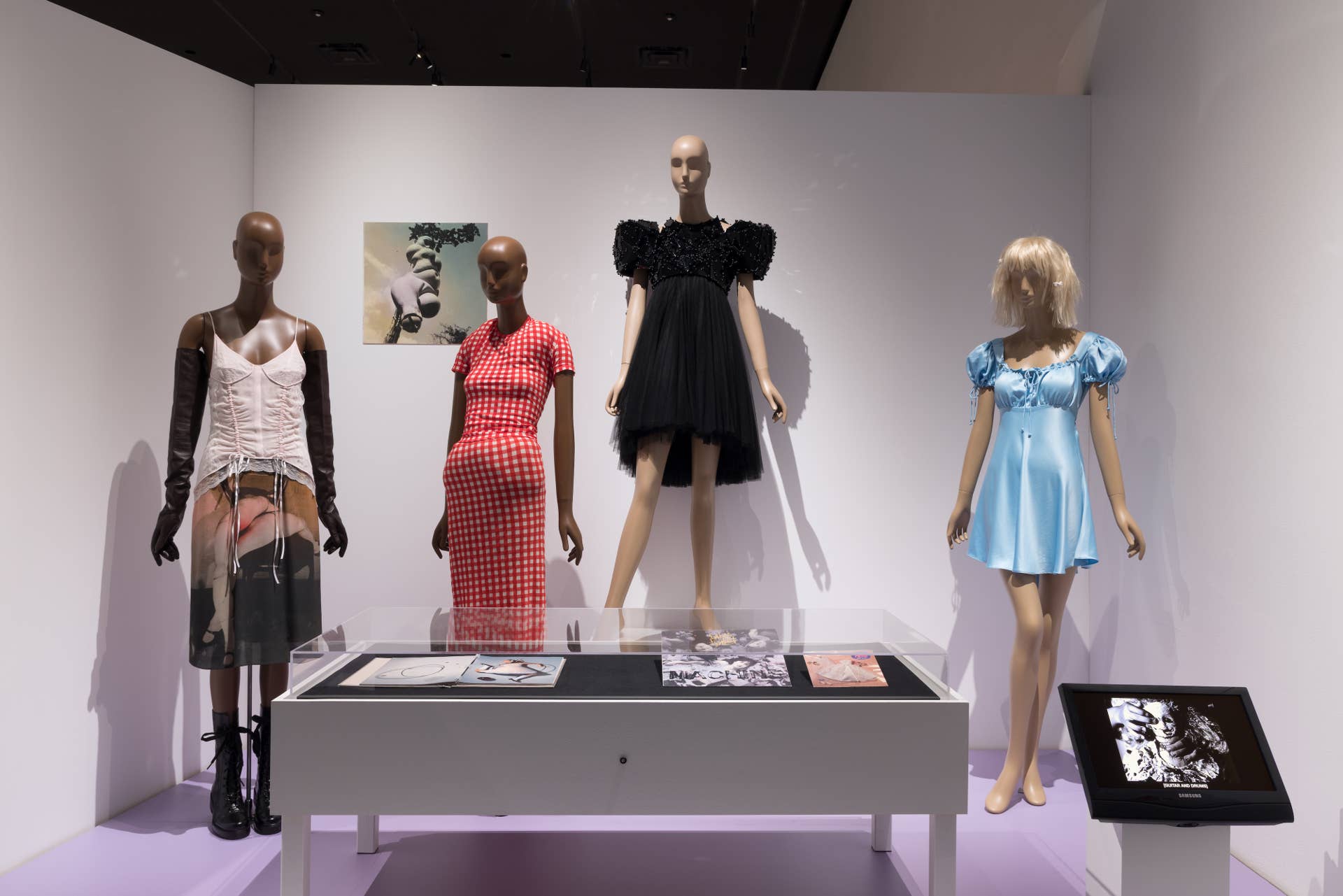
Spanking Machine report and Gap’s “Doll Elements” report single.
Picture: Courtesy of The Museum at FIT
Dr. Hill was additionally drawn to the methods through which dolls intersect with popular culture. As an adolescent within the ‘90s (earlier than Olivia Rodrigo was even born), she was obsessive about the “kinderwhore” aesthetics of bands like Gap and Babes in Toyland, who integrated dolls — and babydoll clothes — into their album artwork and music movies. These seem within the exhibit alongside a Nasty Gal minidress designed in collaboration with Courtney Love.
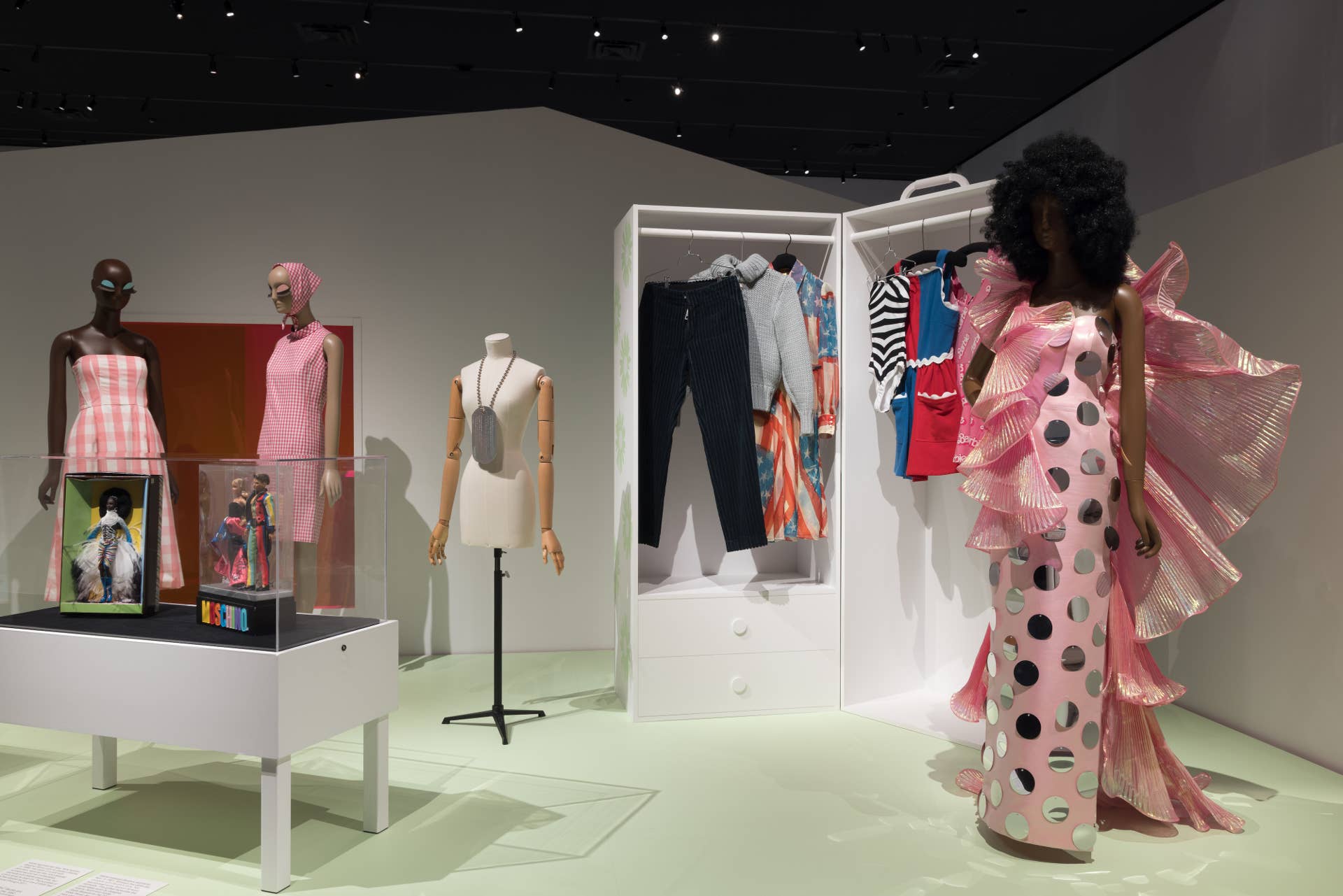
Given her status because the preeminent vogue doll, Barbie — who’s worn roughly one billion outfits in her practically 70-year historical past — fills a whole part of the gallery. Jeremy Scott’s longtime obsession with the miniature blonde manifested in his Spring 2015 line for Moschino. The finale look, an iridescent robe plastered with large paillettes, is displayed beside a blown-up model of Barbie’s fold-out wardrobe.
Picture: Courtesy of The Museum at FIT
Hanging on one rack are items from Margiela’s Fall 1994 assortment, for which the designer recreated doll garments and equipment by enlarging them to five.2 occasions their authentic dimension. Dr. Hill was additionally adamant about exhibiting Margiela’s G.I. Joe-inspired canine tag necklace — launched in 1999 as a nod to his authentic “doll’s wardrobe” assortment. Although it initially proved tough to trace down, she occurred to search out one due to a noteworthy donor, poet Mei-mei Berssenbrugge, spouse of artist Richard Tuttle.
“We’d been working together with her for a couple of months, and she or he’d given us some completely unbelievable issues,” Dr. Hill stated. “She invited us again for one final have a look at a trunk full of garments she discovered, and there the necklace was.”
Picture: Courtesy of The Museum at FIT
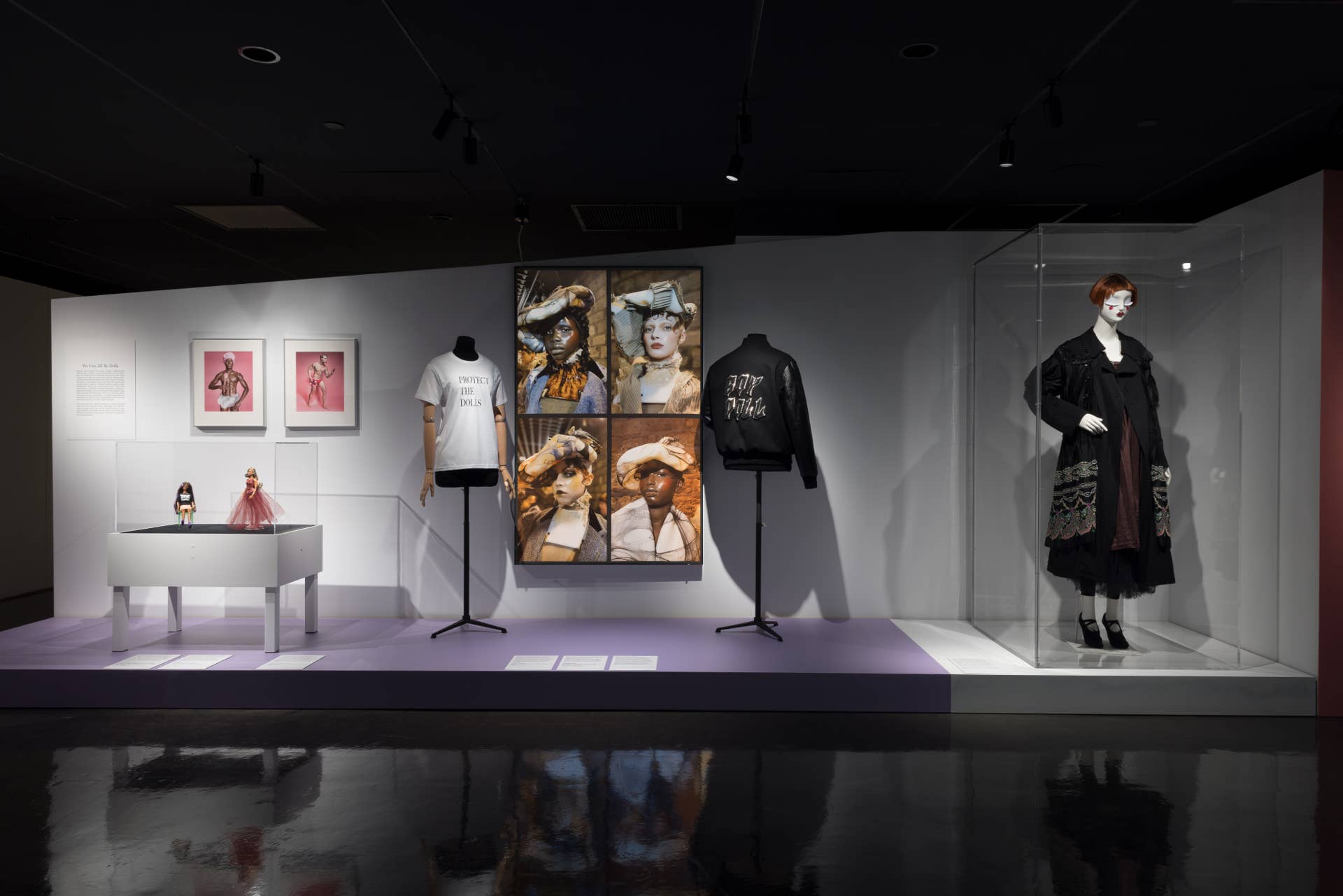
There are lots of more moderen and recognizable designers featured all through the exhibit as effectively, together with Conner Ives (his “Defend the Dolls” tee, after all), Vettese, Trend Model Firm, Bode and Simone Rocha.
“Doll Dressing” is on view now by means of Jan. 3, 2027 on the The Museum on the Trend Institute of Expertise.
