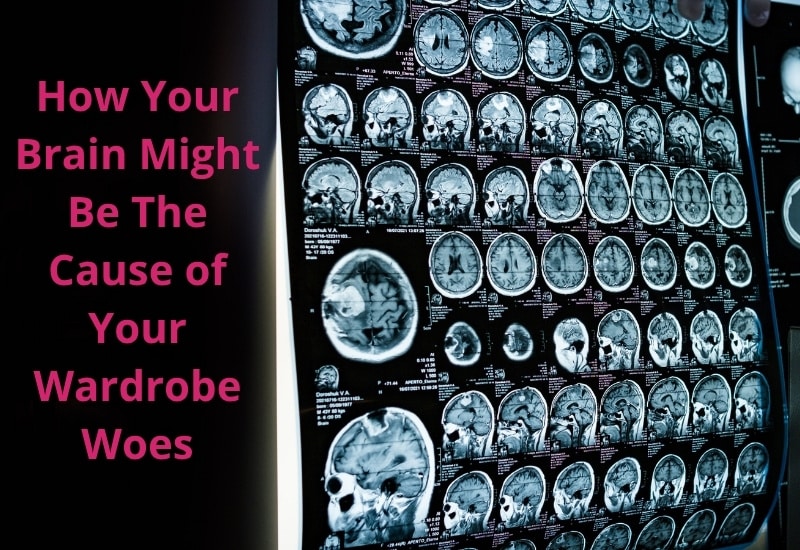



You Didn’t Fall in Love With That Costume. Your Nucleus Accumbens Did
There’s a second in a store that all of us deal with as sacred.
You’re strolling previous a rail, probably not wanting, and one thing stops you. You attain out. You maintain it up. And also you get that small inner elevate, the one that claims Oh. We give that second huge authority. We name it intuition, or style, or the gown chatting with us. Some a part of us believes that if we felt it that strongly, it have to be true.
I wish to damage that for you barely, after which hand you one thing higher.
As a result of a bunch of researchers put individuals in an fMRI scanner and watched that precise second occur. And what they discovered is that the elevate you’re feeling is just not a verdict on the garment. It’s a sign; it fires earlier than you’ve consciously determined something, and it’s being intentionally triggered by virtually every thing within the room.

 What the scanner noticed
The research is Knutson, Rick, Wimmer, Prelec and Loewenstein, published in Neuron in 2007, and it’s nonetheless probably the most quoted items of analysis in retail.
The design is superbly easy. They constructed one thing referred to as the SHOP activity, for Save Holdings Or Buy. Members lay in a scanner with actual cash to spend on actual merchandise they’d really obtain. Every spherical went the identical manner: 4 seconds wanting on the product, 4 seconds its value, 4 seconds to say sure or no.
Splitting the product and the value into separate home windows is the intelligent bit, as a result of it let the researchers watch the mind react to wanting the factor and to what it prices as two fully separate occasions.
And they’re separate. Liking the product activated the nucleus accumbens, a small construction buried deep within the mind that offers in anticipation of reward. A value that felt too excessive activated the insula, which is related to unpleasantness, and it dampened down the mesial prefrontal cortex, which is concerned in weighing issues up.
Right here’s the discovering that ought to make you sit up. Exercise in these areas predicted whether or not the particular person would purchase, over and above what they stated about their very own preferences. Their brains gave the sport away earlier than their opinions did. Because the authors put it, this all occurred previous to the acquisition resolution.
Not whereas deciding. Earlier than that they had even realised that they had determined.
So the image of purchasing most of us carry round is incorrect. We think about a single inner judgement, a type of general verdict the place style and value and want get weighed collectively and out comes a solution.
Two Dials, Not One, Are Handing over Your Mind
That’s not what’s taking place. There are two dials, and so they’re impartial.
One dial is need. How a lot do I would like this factor?
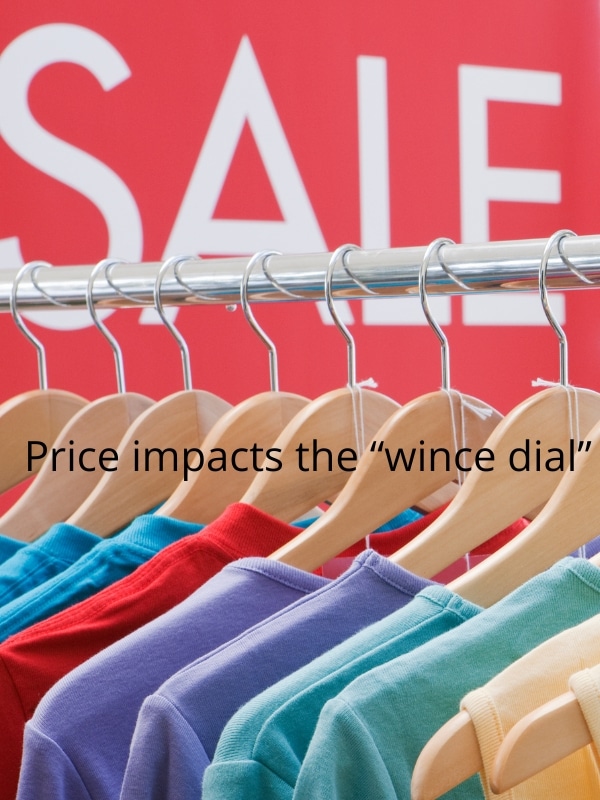
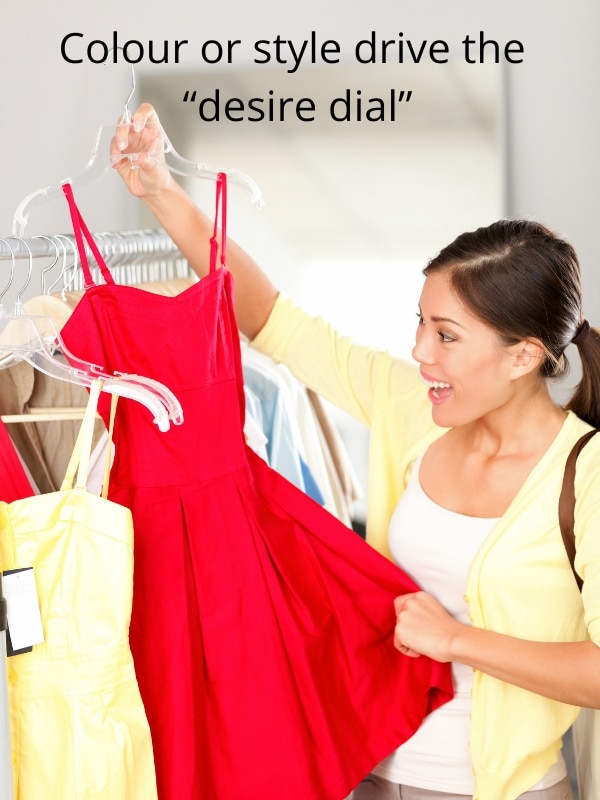 The opposite dial is the wince. How a lot does this harm to pay?
A purchase order occurs when the primary dial is turned up greater than the second. Which implies there are two utterly alternative ways to promote you one thing, and a superb retailer works each directly. They’ll flip the need up, utilizing gentle, styling, scent, shortage and exquisite material.
Or they’ll flip the wince down, utilizing a reduction, a was-and-now tag, 4 instalments, or a card you faucet with out ever seeing a quantity.
Discover that solely a type of has something to do with whether or not the gown fits you.
For this reason the sale rack is so harmful, and it’s not the explanation individuals normally give. A reduction doesn’t make you’re keen on the gown extra. It doesn’t contact the need dial in any respect. It simply turns down the wince, so a light, extraordinary, half-hearted quantity of wanting is all of the sudden sufficient to get you to the until. That’s how you find yourself proudly owning one thing you by no means actively wished. The bar didn’t rise to fulfill your enthusiasm. It received lowered till your enthusiasm cleared it.
That is significantly essential for what you understand to be designer items. The will dial for proudly owning a bit of that designer’s clothes (whether or not or not it fits you, it suits you, and it’s really your model) can utterly override these all-so-important private model standards, when the wince dial is turned proper down as a result of the piece is on a heavy low cost. It’s why understanding your model standards – having developed your private set that’s used everytime you purchase clothing- is so essential. As this information will enable you override your need dial when it’s set off inappropriately.
Then you definately choose it up, and every thing modifications
Now for the half that genuinely modified how I store.
Joann Peck and Suzanne Shu revealed a paper within the Journal of Client Analysis in 2009 referred to as The Effect of Mere Touch on Perceived Ownership. The discovering is strictly what the title says: merely touching an object will increase your sense that it’s yours, and that elevated sense of possession makes you keen to pay extra for it.
Not touching it to examine the standard. Not analyzing the seams. Simply holding it.
What prompted the analysis is my favorite element on this complete sequence. The authors have been spurred on by a shopper warning issued by the Illinois lawyer basic’s workplace, cautioning vacation customers about retailers who encourage them to choose objects up and picture proudly owning them. A authorities workplace thought this was value warning the general public about. The researchers examined it and concluded the warning was truthful.
They usually discovered the web model works too. The place you may’t contact one thing, being invited to think about proudly owning it produces an identical elevate in perceived possession and in what you’ll pay. Which is exactly why product copy is written the best way it’s. Image your self on this on a summer time night. Think about this in your wardrobe. That’s not lyrical description. That’s the mechanism, in phrases.
Take into consideration what a store really is, on this gentle. Not a warehouse the place clothes are saved till offered. A room engineered in order that you’ll contact as a lot as doable. Nothing behind glass. Every little thing at hand top. Racks spaced so you sweep previous the material. Assistants who don’t say “can I enable you“; they are saying “right here, really feel that.”
The bit that issues most for garments
There’s a wrinkle within the Peck and Shu analysis that no one ever quotes, and for our functions it’s essentially the most helpful a part of the entire paper.
They ran the experiment with totally different objects, and the impact was not uniform. With a Slinky, which is nice to deal with, touching it raised each the sense of possession and the constructive feeling, and folks valued it extra. With Playfoam, which is much less nice to the touch, touching it nonetheless raised the sense of possession, however the feeling went down, and so the worth didn’t rise.
Contact solely sells you one thing when the contact feels good.
Now apply that to a wardrobe. It explains the cashmere on the entrance of the store and the polyester on the again. It explains why you personal a silk shirt in a color you’d by no means select, and why you’ve walked away from a superbly reduce jacket in a material that felt papery (which is an efficient factor, as materials matter).
However it additionally explains probably the most frequent wardrobe errors I see. The polyester might drape effectively and really feel high-quality while you attempt it on within the retailer in air-conditioned consolation, however get it dwelling and put on it out on a sizzling, humid day, and that consolation stage is gone.
Each time you decide along with your hand as an alternative of your eye, you’re answering a query no one requested.
However be cautious – materials like acrylic can really feel delicate and good in retailer, however get them dwelling and so they put on poorly. So at all times examine the fibre label on each garment earlier than you even take into account taking it into the change room. That is one thing that I’ve discovered makes decision-making a lot simpler. Take a look at the care label and fibre content. Earlier than you are taking it to attempt on. 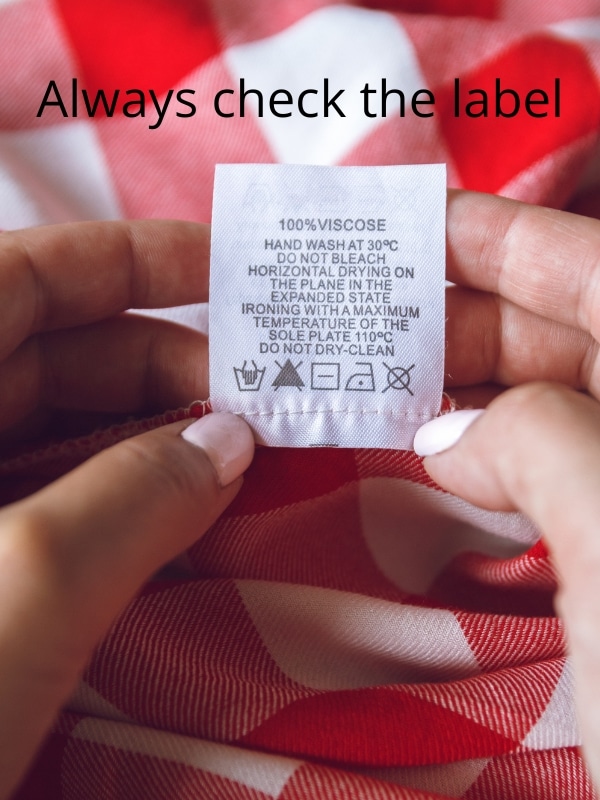
Two questions, requested individually
So right here’s what I’d really such as you to remove. Not “beware of retailers”, which helps no one, however a small procedural change that prices you nothing.
Retailers succeed by mixing your two dials into one fuzzy feeling. Your job is to drag them aside and ask every query by itself.
Arms off first. Look earlier than you contact. Determine along with your eyes whether or not this can be a form, color and line that works for you. Flip the underside nook of the garment up, and also you’ll discover the fibre and care label on one of many aspect seams. Take a look at what it’s made out of – is it a fibre that you simply love and that may put on effectively? Or is it one that may tablet and put on poorly, or not breathe and make you’re feeling uncomfortable? Solely then choose it up if it meets these base-level standards. You’ve simply moved contact from being the factor that persuades you to being the factor that confirms you.
Ask the complete value query. “Would I would like this at full value?” is the one most helpful sentence you may say in a store, as a result of it isolates the need dial from the wince dial. If the trustworthy reply is not any, then you definately don’t need the gown. You need the low cost. These are various things, and solely considered one of them finally ends up being worn.
Put it down and do a lap. Anticipation is a spike, not a plateau. Stroll the store or stroll out of the store for some time, come again, choose it up once more. Actual suitability survives a lap of the store or purchasing centre. A neurochemical spike usually doesn’t.
Ask what your hand is definitely telling you. Pretty material is an actual cause to love a garment. It’s not a cause to imagine it fits you. These are two separate assessments and the pleasure of the primary has a behavior of quietly answering for the second.
One trustworthy observe, as a result of I’d quite you trusted me than be impressed by me. Mind imaging research use small samples in synthetic circumstances, and studying intentions off a scan is a genuinely contested space of science. I’d maintain the neuroscience loosely as a metaphor with good proof behind it, quite than as a regulation. The behavioural findings on contact and on value framing are rather more solidly established, and so they level in precisely the identical course.
Which is that this. The elevate you’re feeling in a store is actual, nevertheless it’s an anticipation sign, not a verdict. It’s telling you one thing about this second. It’s not telling you something about subsequent Tuesday, when it’s a must to dress and go away the home.
This week, attempt one factor: look earlier than you contact. Simply as soon as, on one garment, preserve your arms off till you’ve determined along with your eyes whether or not it’s the correct material, color and nice model for you. See what modifications.
Set Your Personal Private Fashion Standards
An important issue that will help you make selections round what to purchase is authoring your individual private model standards – when you recognize as info what you do and don’t love, the varieties of materials that you simply take pleasure in sporting and that put on effectively. The colors that make you shine, the types that really feel good in your physique and make you content to see your self within the mirror. When you recognize what actually works for you and your life-style, you might be in cost while you’re in shops, as you might be extra simply in a position to be discerning and never let that pesky nucleus accumbens discuss you into making a nasty resolution in your pockets and your wardrobe. If you happen to’d like to develop into extra discerning and empowered round your model, my 7 Steps to Style is the program that may stroll you thru this course of, so that you’re deliberate in your selections.