


The Psychology of Dressing
“Costume for the job you need, not the job you’ve.” It’s a type of phrases that’s been repeated so usually it’s misplaced most of its which means, filed away with different bits of recommendation no one fairly believes any extra. Which is a disgrace, as a result of there’s real psychology behind it, and it’s a great deal extra fascinating than “look good and also you’ll really feel good.” Although, that, too, has some nice analysis backing it.
 The Lab Coat That Modified the Analysis
In 2012, researchers Hajo Adam and Adam Galinsky ran an experiment that’s since turn out to be one of the crucial talked-about findings within the psychology of clothes. They’d individuals put on a plain white lab coat whereas doing a check that measured focus and a spotlight. The group in lab coats made about half as many errors because the group with out one.
Right here’s the twist that makes the examine price remembering relatively than simply repeating. In a follow-up, they advised one group the coat belonged to a physician, and one other group the similar coat belonged to a painter. Solely the “physician’s coat” group confirmed the development. Identical coat. Identical material. Fully completely different impact, as a result of what modified wasn’t the clothes; it was what the clothes meant to the individual carrying it.
Psychologists now name this enclothed cognition, and the brief model is genuinely helpful. Clothes adjustments how your mind performs, however solely whenever you’re bodily carrying it and it carries actual symbolic which means for you. Not one or the opposite. Each, without delay.

The Superman Impact
Style psychologist Karen Pine took this somewhere slightly less clinical. In her research, college college students who placed on a Superman T-shirt rated themselves as extra likeable and believed themselves to be bodily stronger than college students in a plain shirt. No one really bought stronger. What modified was what the shirt symbolised, and that symbolism was sufficient to shift how individuals carried themselves.
That is the place I believe loads of “energy dressing” recommendation goes barely mistaken. It assumes any blazer will do, any sharp trouser go well with, borrowed wholesale from whoever seems to be most authoritative on the web. But when that borrowed energy go well with doesn’t really imply something to you, the enclothed cognition analysis suggests it received’t do almost as a lot work as one thing constructed from your individual inventive fingerprint, the colors, shapes and particulars that genuinely really feel just like the strongest model of you.
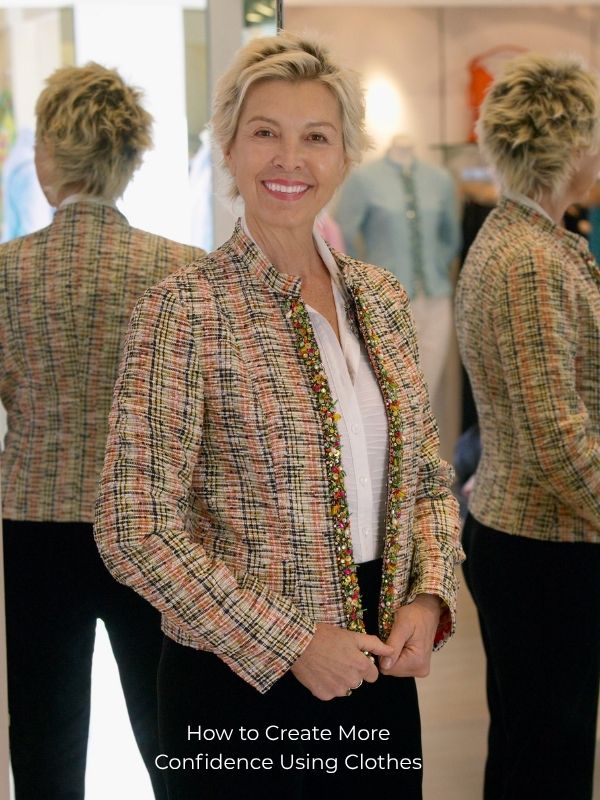
I really like a blazer to make my outfit really feel smarter, but it surely’s not going to be a black one or one that appears prefer it comes from a go well with. It’s prone to be in a bolder color or perhaps a pastel one at instances. However the construction of it, even when it’s patterned, just like the one above, provides it that extra elevated really feel.
Making This Sensible, Not Simply Fascinating
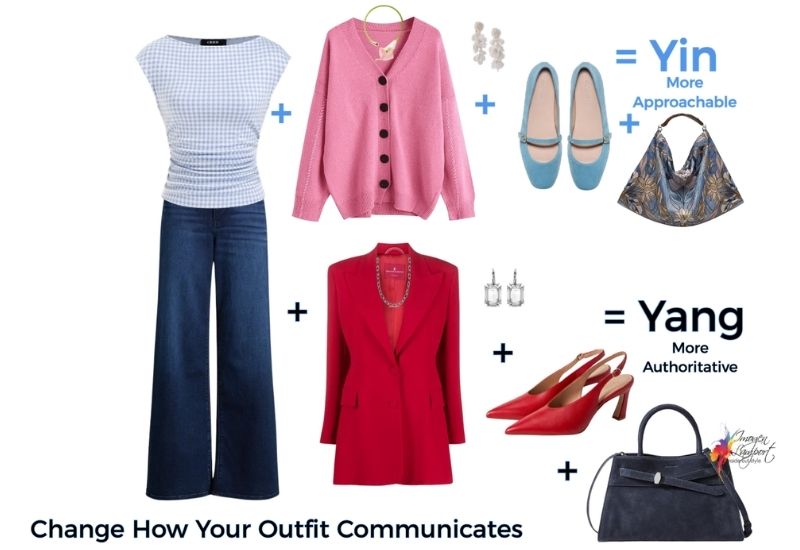
That is precisely how the Yin and Yang framework makes this sensible and relevant to your wardrobe. Yin elements are the receding, softer, extra approachable finish of the spectrum: curved traces, softer textures, gentler color distinction. Yang elements are the advancing, structured, extra authoritative finish: straight traces, strong shapes, larger distinction.
You already know, instinctively, which finish you want on any given day. The helpful half is figuring out which particular items in your individual wardrobe pull you towards which finish, so you may attain for them on function. Have to stroll right into a room and be taken critically? Lean into your yang. Have to put somebody comfy in a troublesome dialog? Lean into your yin. That’s enclothed cognition, made private and completely usable, relatively than one lab coat attempting to do the job for everybody.
 Seven Symbolic Dressing Experiments for This Week
The purpose isn’t to decorate in a different way for the sake of it. It’s to note, intentionally, which decisions really shift how you’re feeling, so you may preserve utilizing those that work.
- Select one yang component on your subsequent high-stakes second. A structured blazer, a strong, robust color, a sharper shoe- no matter from your individual wardrobe reads as authoritative to you particularly.
- Select one yin component on your subsequent delicate dialog. One thing softer in texture or form, to assist the opposite individual really feel comfy round you.
- Put on one thing with actual private which means. A chunk linked to a real achievement or good reminiscence, on a day you want a quiet confidence enhance.
- Discover your “off obligation” items and preserve them for off obligation. If loungewear makes you’re feeling unfocused, reserve it for the times meant for precisely that, relatively than carrying it right into a day that wants sharpness.
- Put together your “armour” outfit the evening earlier than one thing nerve-wracking. Determine it prematurely, so that you’re not making the choice whereas already anxious.
- Run your individual mini experiment. Put on the same silhouette or related clothes in two completely different materials on two related days, one tender, one structured, and spot if the day feels completely different.
- Preserve rating on the finish of the week. Which symbolic decisions really modified the way you felt, and which didn’t do a lot in any respect? You’re constructing your individual proof of what works for you, which issues greater than what works for anybody else.
Your Subsequent Step
Should you’d wish to know precisely which of your individual items learn as yin and which learn as yang, so you may attain for the fitting one on function, that’s exactly what Step 5 of 7 Steps to Style walks you thru, not solely do you study this handy idea in depth, however you’ll additionally study your individual physicality and the way it communicates non-verbally.