

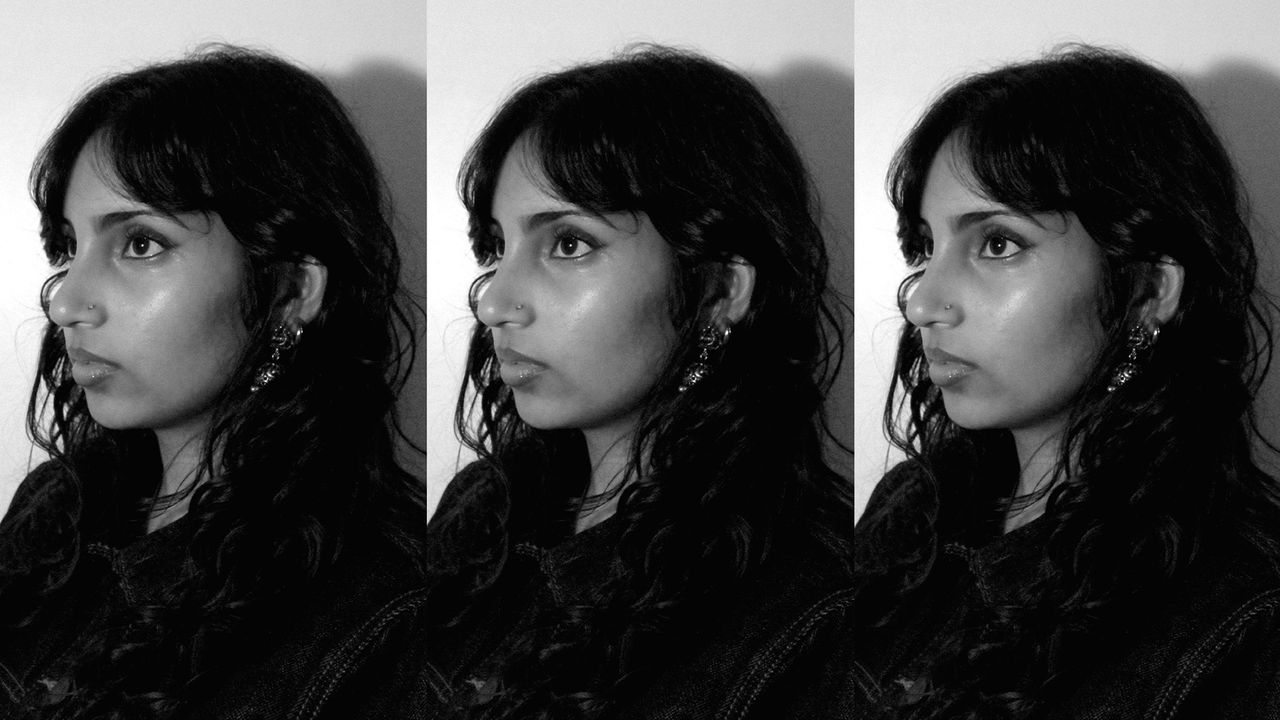
TV: That present was superb. I used to be there, and I used to be fully floored. It was stunning, and it felt so rooted in the neighborhood. The manufacturing was unbelievable.
SM: It actually was. For the gathering, I experimented with supplies like leather-based and fuller silhouettes for the primary time. It was thrilling to construct a whole world across the story I used to be attempting to inform and discover so many various strategies and mediums. I really feel like I actually pushed myself creatively with that assortment, and it confirmed.
TV: I might love to listen to about a few of your inspirations—each in design and in life.
SM: For this assortment, particularly, I used to be impressed by Victorian-era clothes and buildings. I spent quite a lot of time learning corsetry and cage-like understructures and eager about the connection between what’s seen and what’s hidden. A whole lot of my clothes have been constructed by way of development strategies that mirrored that concept. For instance, one gown consisted of greater than 20 particular person panels sewn collectively. The identical was true for most of the tops. I used to be interested by piecing collectively fragments to create a complete, which tied immediately again to the theme of id.
I additionally centered closely available stitching and craftsmanship. I am from India, and one factor I’ve all the time admired about Indian craftsmanship is the unbelievable consideration to element. You’ll be able to see the labor, care, and artistry in every bit. I wished that very same sense of intentionality to come back by way of in my work.
TV: Would you say your upbringing in India has influenced your work total?
SM: Positively. Earlier in my profession, the references have been way more literal. Earlier than my thesis, I created collections impressed by Bharatanatyam, which is a classical Indian dance kind that I studied for 10 years. For one mission, I really laser-engraved rhythmic dance notation onto clothes and constructed a whole assortment round these actions and patterns.
As my work advanced, these references grew to become extra refined. They’re nonetheless there, however they’re woven into the silhouettes, supplies, and storytelling moderately than being direct visible references. Lots of people from my household can instantly acknowledge these influences, which I believe says one thing.
TV: Have you ever formally launched your personal model?
SM: Not but. Proper now, I am centered on gaining business expertise. I just lately obtained my O-1 visa, which was an enormous milestone.
TV: Woo! Main congratulations!
SM: Thanks! After graduating, I spotted it did not essentially make sense for me to launch a model instantly. I wished to be taught extra concerning the business, construct relationships, and achieve sensible expertise first. My hope is that each one of that data will finally assist me construct one thing stronger when the time comes.
TV: How would you describe your work to somebody who has by no means seen it earlier than? Who’re you designing for?
SM: That is all the time a tough query. Most of my artistic course of begins with private recollections, lived experiences, and emotional connections to locations and other people. What excites me most is seeing somebody join with a chunk and instantly think about themselves carrying it. When somebody can visualize the place they’d put on it, how they’d really feel in it, or what it means to them, that is extremely rewarding.
If I ultimately launch a model, I do not suppose it might give attention to on a regular basis ready-to-wear. My work naturally leans towards extra conceptual and avant-garde territory. What pursuits me is creating items that make folks really feel reworked, assured, and emotionally related to what they’re carrying.
TV: That makes excellent sense. I usually take into consideration designers like Olivier Rousteing, who talks about designing for confidence and empowerment. Style can have an actual emotional influence on the individuals who put on it.
SM: Completely. And I believe physique picture is an enormous a part of that dialog. Style training can typically turn out to be very centered round pattern sizes. You are usually designing round a normal that does not mirror most individuals’s realities. Having the ability to put on items from my very own assortment was really essential to me. It allowed me to expertise the clothes firsthand and perceive how they felt. I believe designers ought to have the ability to see themselves of their work.
