


At a second of cultural transition, because the web started seeping into trendy life, “The Satan Wears Prada” was launched only one yr earlier than the iPhone. Wanting again, it feels nearly mythic: a shiny snapshot of the final gasp earlier than vogue, media and tradition have been flattened by algorithms and redirected advert {dollars}. Regardless of arriving within the shadow of a world nonetheless recovering from post-9/11 nervousness and inching towards financial collapse, the period retained a form of aspirational allure rooted within the unreachable glamour of print magazines and the fantasy of New York Metropolis.
Possibly that’s why the movie has endured. All of us in vogue and adjoining worlds know David Frankel’s 2006 movie all too nicely — the slicing one-liners, the cerulean monologue and its distinctly noughties sense of glamour outlined by a world nonetheless lived totally within the second. It captured an trade on the cusp of immense change, when print journalism nonetheless held cultural authority. Now, the web has utterly remodeled that world, and it’s on this stage the place the sequel enters the fray. It has already generated tens of millions in buzz alongside surpassing the unique movie’s field workplace complete — garnering over $433 million globally inside its first 10 days, together with roughly $76.7 million domestically on opening weekend in response to box office stats.
The sequel sees Andy Sachs drawn again into the orbit of Miranda Priestly years after leaving Runway, because the journal makes an attempt to outlive a collapsing print ecosystem and a fast-fashion scandal triggered by the publication of a function on a Shein-like conglomerate that Miranda had missed.
Photograph: Getty Photos
On the identical time, Andy and her workforce at a extra “critical” publication are abruptly laid off — an early sequence that instantly situates the story throughout the precarity of at present’s media trade. From there, Andy’s return to Miranda’s world unsettles previous energy dynamics as she is pulled again into efforts to stabilize and save the establishment she as soon as escaped.
Working alongside it is a billionaire storyline, as tech-backed patrons enter the orbit of vogue media, endeavoring to reframe editorial affect with personal capital as the principle driver. Ring any bells?
It’s on this framework that the movie each nods to and arrives inside an much more tumultuous second for journalism, media and the style trade at giant, because it faces shrinking budgets and pressure throughout all sectors — the place instability is now not confined to the newsroom, however felt throughout the complete manufacturing and consumption chain of vogue. This raises the query of whether or not that is, in actual fact, the appropriate second for the movie’s launch.
For vogue author and guide (and former The Zoe Report editor) Aemilia Madden, it’s. The movie’s relevance extends past an trade nonetheless navigating an identification disaster, and speaks simply as clearly to the structural gaps throughout the movie trade itself, which is dealing with a parallel set of pressures and recalibrations. “To have a film that passes the Bechdel check, that’s aimed immediately at girls, and doesn’t middle relationships is what we’d like extra of; and what studios don’t all the time take dangers on at present,” she says.
Amy Odell, a veteran vogue journalist, writer of the bestselling “Anna: The Biography,” in addition to the voice behind the Back Row podcast and publication, additionally underscores the movie’s worth as a cultural doc — one which captures not solely surface-level shifts throughout the trade, however the slower structural erosion beneath them. It’s, she suggests, a intentionally sobering reflection of a sobering period.
“I believe the commentary on the media trade is de facto on level,” she notes. “The primary movie offered a fantasy of the world, and this one presents extra of the grim actuality…Condé Nast has been reduce all the way down to measurement — it’s nearly like a clipping firm now.”
Photograph: Macall Polay/2026 twentieth Century Studios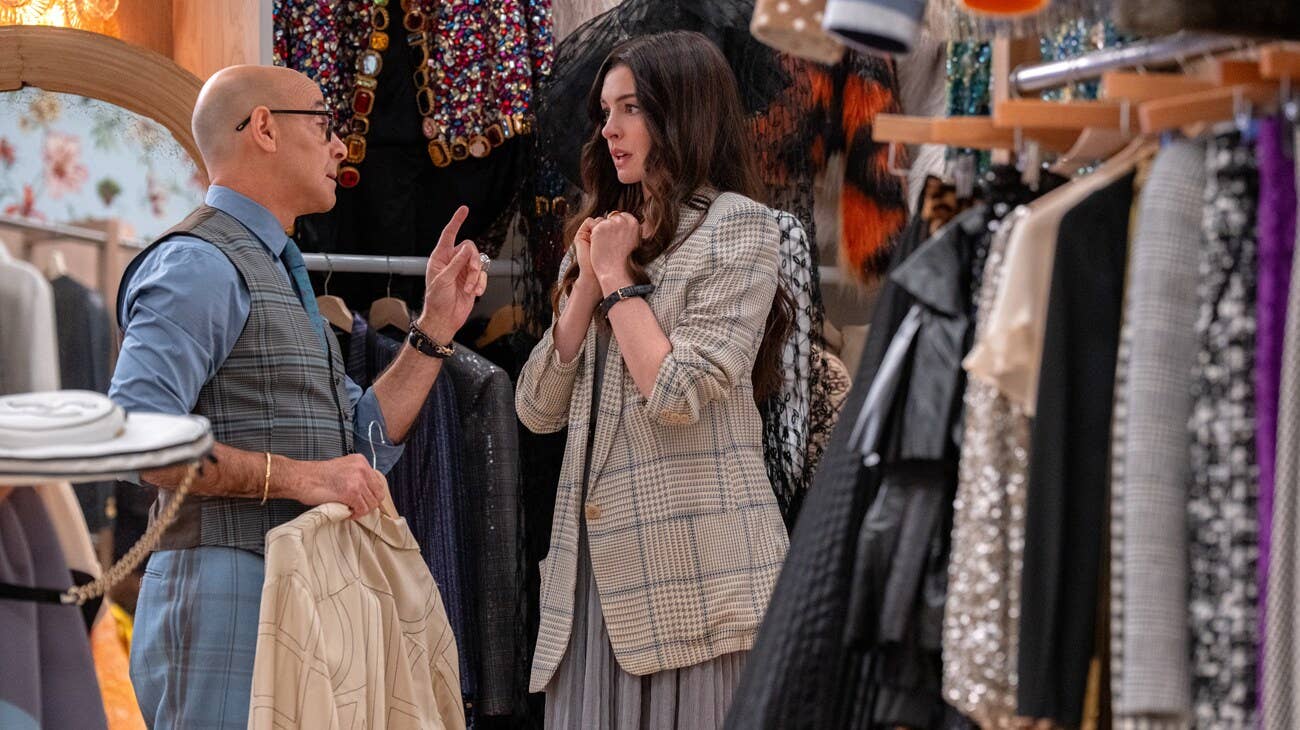
That grim actuality is hardly an exaggeration. In simply the final six years, main media corporations together with Condé Nast, Vice Media and Vox Media have collectively undergone 1000’s of layoffs, with Glamour among the many most affected in Condé’s newest rounds, which eradicated a lot of the title’s editorial and help workers.
Whereas the style world has remodeled in some ways over the previous twenty years, Odell, who has reported extensively on its inner buildings, is direct about what has not modified: “There are nonetheless plenty of poisonous assistant jobs,” she says. “Lots of people nonetheless aren’t getting paid.” Even because the trade has turn out to be paradoxically extra company and ostensibly extra democratized, its inner hierarchies stay largely intact.
For Madden, who now authors the publication Taeste Bud, there’s a lot to reconcile in navigating an trade that’s on more and more fragile footing. “Proper now, issues can really feel fairly bleak — AI is changing our jobs, bills are rising, politics are poisonous,” she says. Maybe that’s why we hold returning to those tales, particularly when it juggles our harrowing actuality with a wholesome dose of satirized whimsy. “I believe there’s one thing comforting about trying again and viewing the previous as easier occasions, even when that’s not the way it felt residing it.”
Nostalgia is a driver of many sequels, however “The Satan Wears Prada 2” feels particularly resonant given how the primary movie captured the golden age of magazines. Social media strategist and vogue creator Jay Choyce-Tibbitts zooms out to the system that reshaped all the pieces round it — the web. “Earlier than that transformative interval, tradition was filtered by way of a comparatively small variety of gatekeepers. Condé Nast and Vogue have been actually the documenters, filters and distributors of tradition,” he says. “However at present mainly each single particular person is their very own writer.”
Photograph: Mike Coppola/Getty Photos for twentieth Century Studios
In that shift, legacy media has been compelled into competitors with the very audiences it as soon as formed. Choyce-Tibbitts factors to one of many movie’s quieter traces as unexpectedly exact: Stanley Tucci’s character Nigel Kipling, the unwavering artwork director of Runway, makes a lighthearted but pointed comment concerning the ’90s, when magazines operated with seemingly infinite budgets and will “spend three months in Africa” for a photograph shoot. This isn’t an exaggeration: Of their heyday, annual journal budgets usually bumped into the multimillions, funding worldwide shoots, giant artistic groups and time to domesticate their work into one thing stunning and memorable. That tempo is now incompatible with a digital-first panorama.
Now, magazines produce content material that, in response to Nigel, “individuals watch whereas they pee.” These basic modifications in the best way that magazines function have left their most devoted audiences more and more area of interest. “The journal now needs to be a spot for the fanatic,” explains Choyce-Tibbitts. “If they aren’t deeply invested, they will get that info on-line. It’s modified from a macro perspective.” (Therein lies the clipping farm.)
Choyce-Tibbitts additionally reads the sequel as unusually correct in the way it captures the economics of latest media. “The ability play between the journal and types, the ‘no us, no you’ second between Emily and Miranda, is so actual,” he says. What emerges is a system the place even cultural establishments perform as income engines first and storytellers second.
Emmy-nominated journalist (and Rolling Stone’s former Senior Multimedia Editor) Kyle Lamar Rice, who now writes the menswear-culture hybrid Substack The Cultured Swine, wasn’t as swayed by the movie’s charms.
“I went into the film with low expectations as a result of I really like the unique and sequels not often land in the identical method,” he says. For Rice, the difficulty shouldn’t be whether or not the sequel succeeds on the floor, however what it chooses to not confront: The instability of media exists within the background, however by no means totally enters the body as Andy Sachs gallivants all through New York Metropolis contending with a brand new guard of fashionistas and singlehandedly restoring Miranda Priestly’s status. Whereas the movie acknowledges the Jeff Bezos-sized elephant within the room, it could not totally account for these within the trade left selecting up the items. “Media might be in one of many hardest spots it’s ever been in its complete lifespan,” Rice says. “We’re at an inflection level — it’s do or die.”
Photograph: Jose Perez/Bauer-Griffin/GC Photos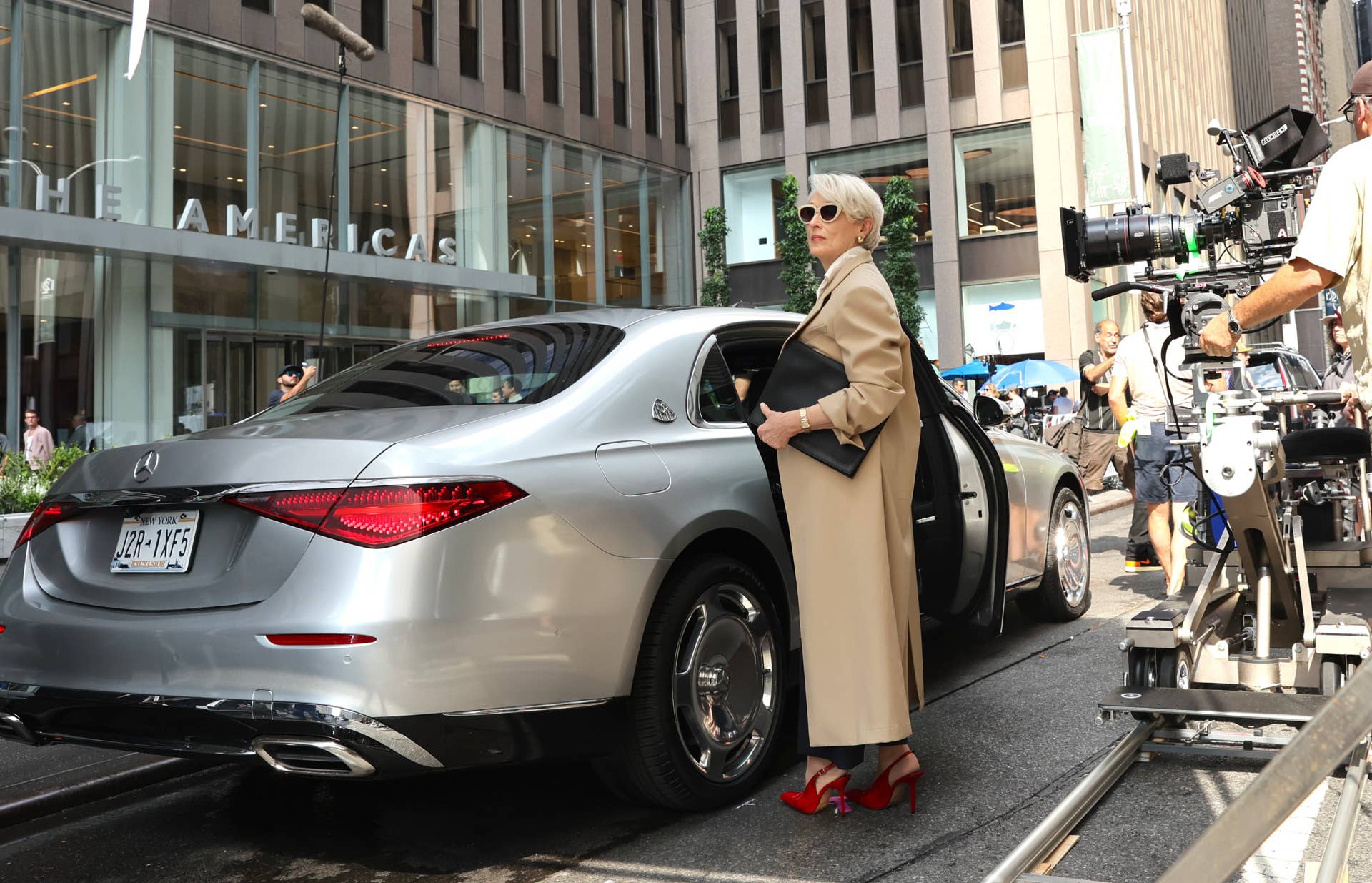
Like Rice, many established writers have left their journal posts (by means of selection or necessity) and launched their very own platforms — be it a Substack or impartial title — as editorial roles contracted and impartial publishing grew to become each a artistic outlet and an financial necessity for survival. However even in all these evolutions, one factor stays the identical: an unrelenting dedication to the craft.
One thing the movie captures throughout each installments — and that is still a permanent reality of this trade — is that, beneath all its instability and toxicity, is a love for the sport that may’t be completely shaken. Miranda’s now-famous line from the primary movie — “Don’t be ridiculous, Andy, all people desires this,” delivered within the automotive throughout Paris Fashion Week, stays pretty related. Whereas we all know the gloss is a façade and the trade is in the end sustained by exhausting work and exhaustion in equal measure, there stays an nearly intrinsic pull towards it.
“Once we have been children, media was pure magic,” recollects Rice. “I believe to an extent, plenty of us nonetheless have that struggle in us. However we even have a greater sense of what’s life like now.”
