I began writing “Tips on how to Speak About” guides with a mindset that no person ought to must really feel silly speaking about garments. If you happen to’re studying this weblog—there are not any silly questions.
This information will cowl the whole lot from “what are denims?” to “what are sanforization and mercerization?” However I am not going to cease there. I am additionally going to deal with the issues that make denim particular. Why do folks like uncooked denim? Why do folks like Sashiko and Boro? What is the take care of the various kinds of trucker jackets? Heddels used to have a dictionary, however I will step past that, and attempt to share the spirit—not simply the definitions.
You’ll hear me usually subvert the whole lot I say by calling it pedantic and pointless, but in addition level out precisely why these detailed definitions are vital; if this appears unusual, it is as a result of actuality is unusual. And in addition as a result of I wrote this text over the course of years.
Once more, there is not any have to learn this information from begin to end. Be happy to leap round to any phrase that at all times confused you, or skim by way of the headlines for the part you truly care about.
(Enjoyable reality: I wrote large components of this text 3 times over, and unintentionally deleted them, which is why I have been engaged on it for years. However you lastly get to learn it now! Please subscribe to keep me from going insane over the idea that all that effort was wasted!
Actual fast: Denim is a cotton twill cloth comprised of indigo and white yarns.
Extra particularly, Denim is a warp-faced cotton twill (2:1 or 3:1) with indigo warps and a white weft. I do know this sounds pedantic, and I will think about just a few issues that do not meet that definition precisely, however I am additionally going to level out why each obscure element of that definition is a key a part of what makes denim what it’s.
Denim is understood for hardiness—it’s typically a thick, heavy twill—and for the visible texture created by the weave. For these causes, it’s typically, however not essentially, utilized in workwear and different rugged functions.
If you take care of etymology. Denim will get its identify from Nîmes, France. It was initially generally known as “serge de Nîmes.” Nonetheless, denim isn’t serge—they’re woven in several methods. Observe that no person argues that denim needs to be made in Nîmes. It isn’t a DOP like some fancy Italian cheese, you can also make denim anyplace. Japanese denim is usually a few of the fanciest denim there’s.
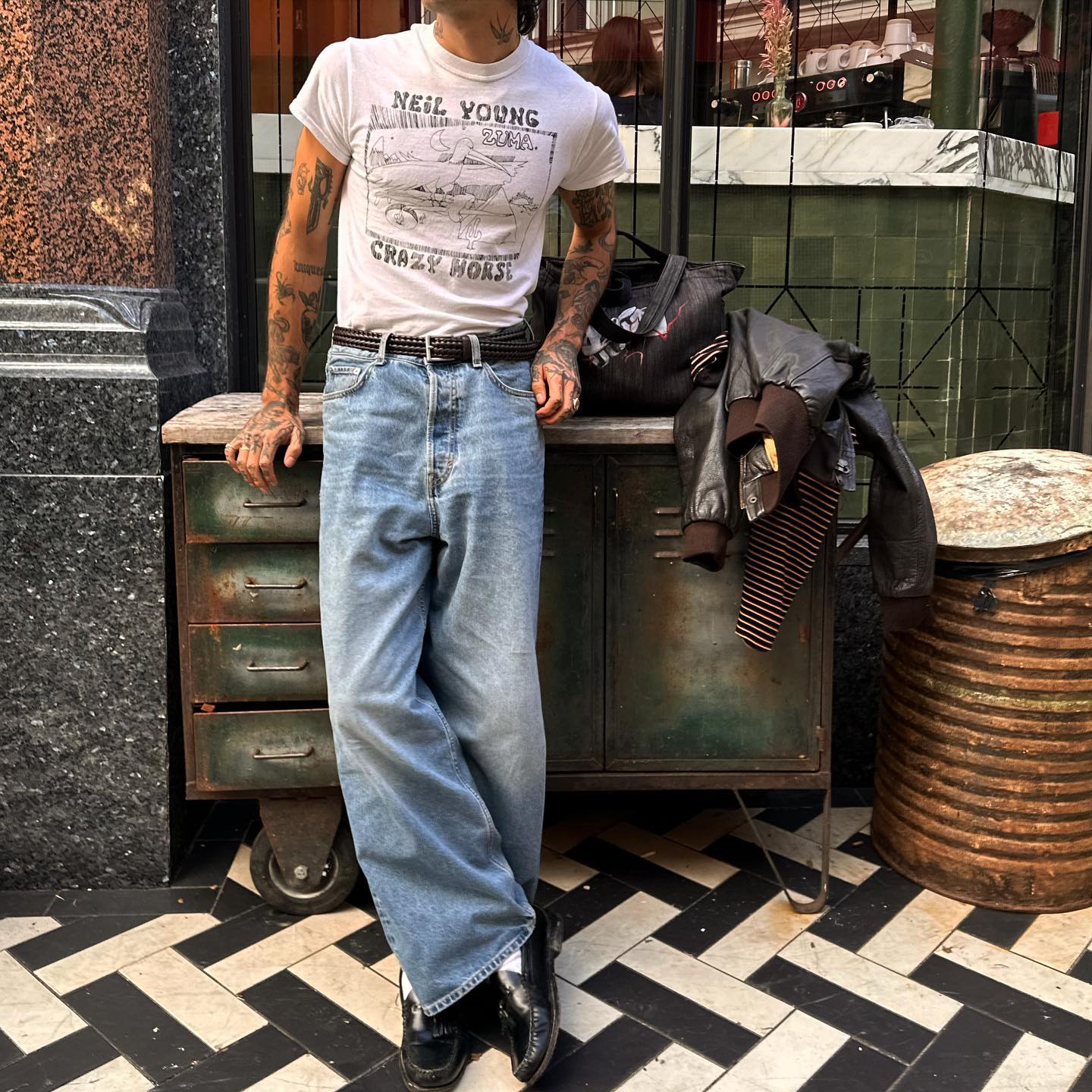
Berg & Berg; Gustavo. Denim might be dressed up or down a good bit, but it surely’s finally a really informal cloth.
Wool trousers clearly aren’t made from denim. No, your costume pants aren’t denims.
Chino material isn’t denim. This appears apparent, however the difficult factor is… Chino is a cotton twill. Like denim. However they really feel totally different. Chino may really feel crisp and ethereal, it’d wrinkle, it may need a kind of waxiness to it. It is perhaps hardy like denim, but it surely’s more likely to wrinkle. There is no clear-cut definition of “chino material” in addition to cotton twill—the distinction is refined. This guy digs into actually wonderful particulars with one pair of chinos and one denim cloth, however I do not know if I wish to level to one in every of these as a defining distinction, so so far as you are involved, they’re totally different, and you may understand it if you see it.
Materials woven in plain or satin weaves aren’t denim. A Jacquard weave can be not denim… until it’s, as a result of a Jacquard weave is a weave made on a Jacquard loom, which is bizarre, as a result of a Jacquard loom is a computing machine; it may be programmed to weave most patterns… together with denim, I suppose.
Chambray isn’t denim. Chambray is apparent woven, denim is a twill. Whereas each mix indigo and white yarns for a considerably related textured impact, this distinction might be fairly vital to the texture and hardiness, and infrequently to the burden and coloration, so I would not consider denim and chambray shirts as interchangeable. Nonetheless, many manufacturers do confuse the 2, so be careful! Any time you see a “denim chambray” shirt, any person someplace is mistaken, and you’ve got a query you may wish to ask.
One solution to inform the distinction between denim and chambray could be to take a look at the reverse facet of the material (the facet that is not the face, i.e. the inside facet of the garment). Denim, being a warp-faced twill, ought to look totally different on the reverse: extra of the white weft thread will present by way of, with solely hints of indigo. Chambray will usually be very related on each side, since plain weaves are even. Facet be aware: you too can name the face the “obverse,” which is seemingly the other of “reverse,” however… do not.
Hickory Stripe cloth isn’t denim. It is truly a type of seersucker. That mentioned, it is often heavy, indigo-dyed cotton, and is used on plenty of workwear and different clothes which may in any other case be made from denim.
Corduroy, Velveteen, and different pile materials aren’t denim.
Fustian isn’t denim, however it’s ostensibly the material used for the pants initially known as “denims.” Extra on that later.
Trucker Jackets may or may not be made from denim. 5 pocket pants may or may not be made from denim. Wrangler Wrancher “costume denims” are often polyester (and never dressy in any respect).
Now let’s get into some trickier circumstances.
Black, white, and coloured “denim” is not technically denim. The indigo and white yarns are defining traits of denim. Strong blue or stable white twill is not denim. Garment-dyed twill is not denim. If I actually wished to be a purist, I might even argue that twill with warp threads dyed with a blue dye aside from indigo is not denim, however even I am not that pedantic.
We might strive to attract a line right here, however issues get hazy. Do you name it black denim when it is on 5 pocket pants or a trucker jacket, however not when it is on a special garment? Do you name black-on-white twills denim, however black-on-black not? Do you level to some specific remedy? The one clear line is the formal definition, which doesn’t embody any coloration aside from blue.
All that mentioned, there’s nothing mistaken with coloured twills. Black, white, and off-white are widespread and may look excellent. Most of what I’ve to say about denim is related to coloured twills as properly. Simply acknowledge the technical distinction.
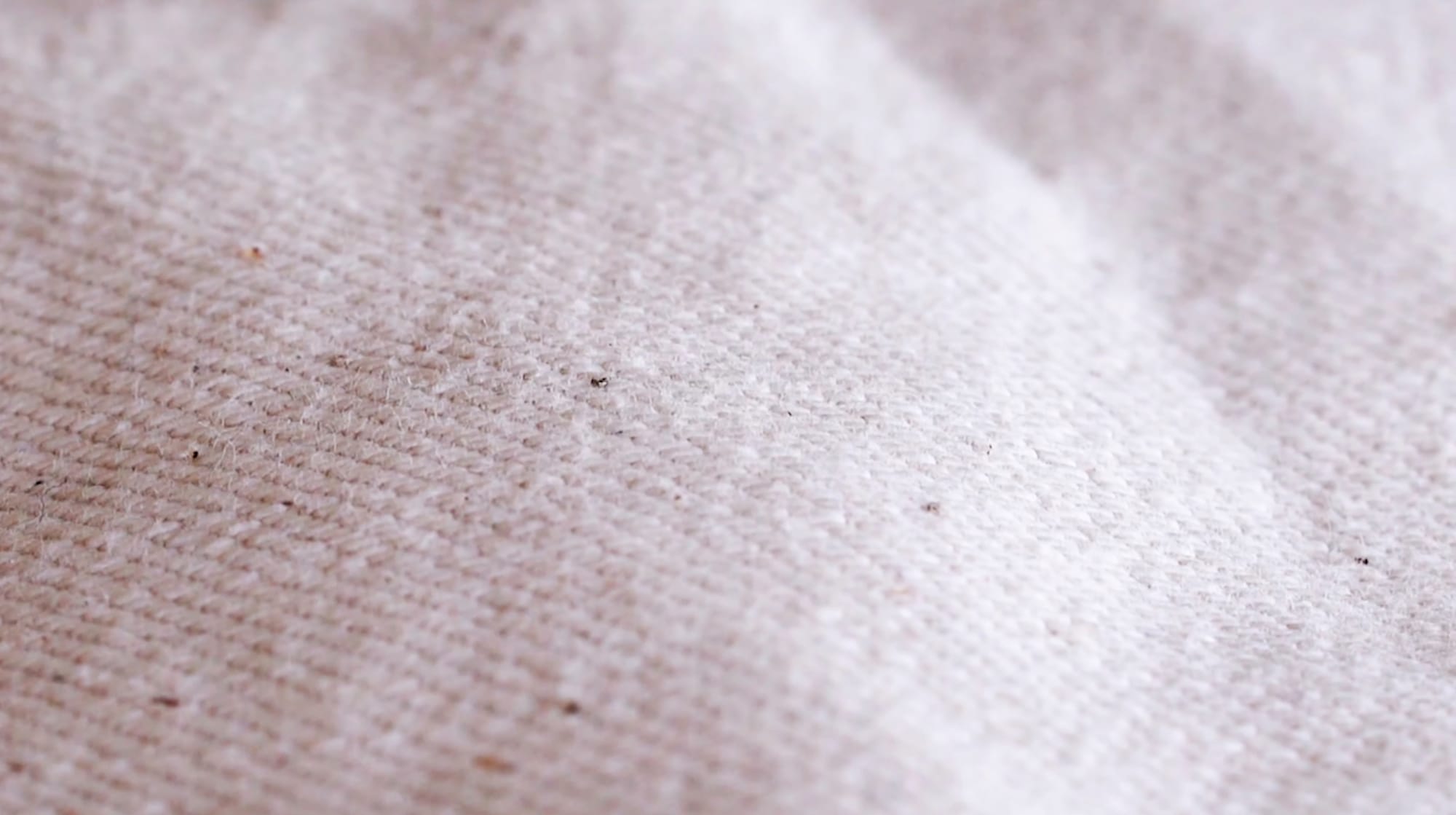
White, off-white, undyed, or “pure” “denim” is usually referred to as “ecru” denim. If calling it that makes you are feeling like Patrick Bateman, then do not. Typically, manufacturers is not going to solely not dye the cotton—they will not even trouble eradicating the flecks of the cotton seeds. This is called seeded denim. It is principally ecru denim with some little black flecks.
Now, for some extra pedantic unhealthy information. Stretch denim and most efficiency denim are… type of additionally not denim. Denim is, by definition, cotton twill. If we wish to be strict about that definition, any mix in any respect is simply not denim. The ever-present mix of 98%-2% Cotton to Elastine is, technically, not denim. Polyester, hemp, lyocell, and related blends aren’t denim. And indigo-dyed wool twill isn’t denim.
Possibly you do not care. In a sensible sense, 2% elastene blended into pants that in any other case meet the definition of denim are nonetheless quite a bit like denim. You possibly can nonetheless name them denim, so long as it is smart to you.
However it’s totally different from true denim in a manner that you’ll most likely have the ability to discover, in case you are paying consideration. Materials with elastene and polyester often don’t age properly or drape in addition to pure cotton twill. Elastene, particularly, loses its elasticity after a few years, which turns these stretchy clothes into scorching rubbish a lot sooner. Heavy, pure cotton twill provides denim a signature construction, and it ages in a selected manner. Some manufacturers may additionally create “pure stretch” by altering up the weave or one thing else—once more, this is able to have an effect on drape and different properties, so even when it appears to be like like denim, it will not be the identical. As you will see later, folks love denim for the way in which it ages. As a lot as I’ve referred to as this distinction pedantic, it has sensible weight to it.
Once more, that is to not say that each one blends and different supplies are unhealthy. They is perhaps extra comfy. Hemp and Lyocell supply environmental advantages. The wool chore coat from Apolis was one of many menswear world’s favourite gadgets again when it was offered; it pale and aged in a manner folks liked. A few of these gadgets may look higher or really feel higher, however by the strictest definition, none of them is technically denim. (Elastene continues to be unhealthy, do not buy clothes with elastene in it).
Denim manufacturers get pleasure from sure uncommon dying strategies, reminiscent of overdying or persimmon dying, or generally use colord wefts or one thing else funky. I have a tendency to consider most of this as nonetheless being denim, but it surely’s a wonderful line between just a little one thing additional and a coloured twill.
I’ve a jacket in a flocked denim, which is an odd denim with a remedy on prime, and an additional coloration on prime of that. The additional coloration is designed to fade comparatively quick, slowly revealing the denim beneath. I really feel like this nonetheless counts as denim, as a result of the additional bit is a separate layer on prime of the odd denim… however alternatively, it appears to be like nothing like denim when new, at the least not from the skin.
Some manufacturers make denims in a “trompe l’oeil” type. French for “deceiving the attention,” “trompe l’oeil” refers to an artwork type that entails use of hyper-realistic components to create an optical phantasm of dimensionality. With denim, the concept is to make stable non-denim pants, after which fake you wove them like denim by printing the denim texture on prime. The print can look like aged, or pale, or patched, or distressed in any manner you need, but it surely’s all only a print. A few of these prints appear to be they’re distressed, after which have one other print “behind” the distressing. It goes fairly deep. I consider this as a cute gimmick that, in actuality, defeats the precise function. You need the feel, you need the precise dimensionality of age. Nonetheless, this can be a distinctive inventive method, and there are cool manufacturers enjoying with it, so that you do you.
Oh boy.
Alright, so let’s begin with cotton. I am not even toing to trouble speaking about rivets or zippers or something like that. For now, we’re simply going to deal with how the material itself is made. And yeah, that begins with cotton.
Cotton is… an entire loaded factor. Cotton requires plenty of water and plenty of labor to develop and harvest. The historical past of cotton within the U.S. isn’t solely a historical past of the founding of an financial system, however a historical past of slavery. The cotton gin was supposedly meant to make slavery moot; as an alternative, it breathed financial life into cotton plantations and perpetuated the trade. And never solely cotton, however denim particularly, consumes inordinate quantities of water. The main points of the social and environmental impression of cotton are past the scope of this text. I’ll contact on them often, however for now, suffice it to say that… properly, cotton is an entire loaded factor.
Anyway, some way or another, the fluffy little balls on cotton plants turn into big ol’ bales of cotton, which end up in some factory. That video positively undersells the labor concerned. However you’ve got these snarled fibers and also you wish to get some lengthy, individualized strands of fiber that you may truly spin into yarn.
So that you may comb the cotton. Combing cotton is the method of… properly, think about a machine with an enormous steel comb, think about the tooth. Yeah, that is how they separate the cotton out like that. The combing course of helps line these fibers up into paralell strands, helps filter out any brief ones (lengthy strands are softer and stronger and higher for causes I am too lazy to get into proper now), and customarily primes these fibers to be spun into yarn.
Alternatively, these fibers is perhaps Carded. A carding machine achieves one thing related extra cheaply. The fibers will not run fairly as parallel, the fibers can be shorter, they will not be as clean, the materials may capsule… however for daily materials like denim, that is usually thought of an affordable trade-off. Combing is often most popular for luxurious merchandise.
Fibers are spun into yarn
So you’ve got just a few wonderful strands of cotton fiber. They’re skinny and weak. You actually cannot use them for a lot of something. You need your denim to be hardy and robust. So what do you do? You’re taking just a few fibers and also you spin them collectively into yarn.
This part goes to look pointless, but it surely begins to matter after we discuss left-hand, right-hand, and damaged twills, so I will attempt to be just a little particulars.
A single yarn is a bunch of fibers spun collectively. They are often spun clockwise—which we name a Z-twist—or counter-clockwise—S- twist. Why are we calling them singles?
Possibly you need that yarn to be even stronger. Hey, what if we took two or three single yarns and we twisted them collectively? Nicely, that is after we get to speaking about ply. An N-plied yarn is a plied yarn made by twisting N singles collectively. Usually talking, you wish to twist the plied yarn collectively in the wrong way because the singles—Z-twist singles must be spun into an S-twist yarn, or vice-versa. Utilizing the identical twist at each ranges will lead to looser yarns, which… is perhaps helpful if you wish to obtain sure textures (like bouclé, which I will not outline right here), however is unhealthy for sturdiness and often not what you wish to do for denim.
You would go even farther and spin plied yarns into cables. If you happen to use Z-twist singles and S-twist plied yarns, you most likely need Z-twist cables. Once more, this is not actually a lot of a factor for denim.
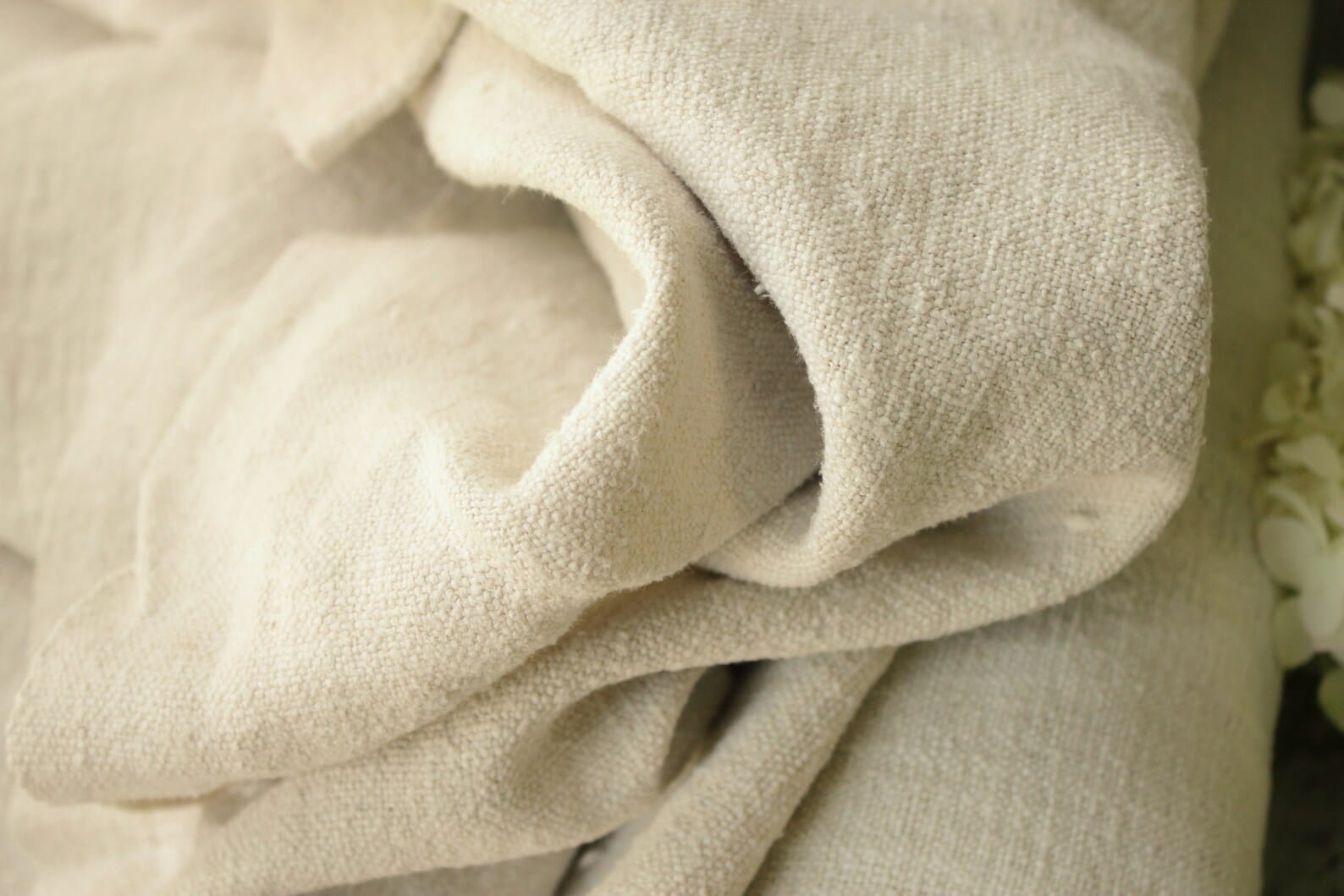
Yarn may deliberately be twisted as an uneven yarn to make it slubbier or fade in another way or one thing like that. Slubs are little irregularities within the cloth—a raised texture, just a little darkish spot or white spot right here or there. Here’s some slubby linen fabric. See how slubby it is? that’s what slubbiness is.
Yarns are dyed.
Nicely, first: yarns is perhaps mercerized. Mercerization is a fancy industrial process of treating cotton with fancy chemical compounds that make it stronger, make it take in dye in another way, and type of give it just a little sheen some folks like.
At this level, a lot of the yarns should be dyed. If the yarns are woven earlier than being dyed, the material will come out stable. If you happen to dye a garment on the very finish, when it is already a garment, it is garment-dyed, and it will come out stable. However as a result of denim is an indigo-on-white twill, denim must be yarn-dyed.
Particularly, the yarns which might be alleged to be indigo or blue should be dyed blue. The yarns which might be alleged to be white is perhaps left undyed, or is perhaps bleached or in any other case handled to be a considerably totally different “shade” of white.
Extra particularly, the yarns which might be alleged to be indigo is perhaps dyed utilizing indigo dye—”true indigo” is constituted of the indigo plant, however nearly indigo lately is artificial, as a result of it is cheaper and higher for the atmosphere and dyes issues extra evenly. Indigo has one more a protracted, complicated historical past I will not get into. However in current… Indigo achieves a sure shade of blue, and in addition “bleeds” out of cotton.
Bleeding causes denim to fade, helps create uncommon growing old patterns (as a few of the indigo threads bleed into a few of the white threads), and probably stains belongings you sit on. I will speak extra about bleeding once I discuss sanforization and washing, however this is perhaps one cause some firms attempt to use different artificial types of indigo, or different blue dyes that are not indigo.
In a while within the course of, a garment or cloth is perhaps dyed or handled to realize a considerably totally different coloration than you will see within the preliminary dye. We’ll get to that.
Dyed yarns are woven into cloth
So you’ve got a bunch of yarns and it’s a must to make a sheet of cloth. What do you do? You weave the yarns collectively. Particularly, you weave the yarns collectively in a 2:1 or 3:1 twill weave, the place the two/3 represents the indigo warp, and the 1 represents the white weft. Denim is warp-facing, which is to say that the warp—the larger quantity, the indigo threads—faces the skin, so the skin of the denims is bluer. The within or “reverse” reveals the weft extra, so it is a lot lighter. Go flip your denims inside out. Yeah, see that? That is what that is about.
You possibly can’t actually weave denim by hand, it is a dense weave, it’s a must to use some type of machine. These machines are referred to as looms. There are three main forms of looms: projectile looms, shuttle looms, and handlooms. Projectile looms are probably the most environment friendly, by far. They’re about ten occasions sooner and make extra even denim than shuttle looms, and handlooms do not actually evaluate in any respect. Projectile looms are type of simply higher. Now, you is perhaps asking, “why do folks use shuttle looms?” And the reply is… Oh, boy.
When a shuttle loom will get to the sting of the material, it finishes that edge. Projectile looms do not do that. This does not actually matter. Some folks argue that shuttle-loomed is extra sturdy, but they’re wrong. Besides… properly, projectile looms have been and are utilized by mass market manufacturers to make low-cost denim. Folks just like the artisinal craftsmanship that mass market manufacturers do not do. In order that they began to get the concept they need to search for the self-finished edge made by a shuttle loom. This “self edge” or “selvedge” or “selvage” denim (individuals are bizarre) is not higher in any possible way besides that smaller, cooler manufacturers often make it, and larger, cheaper manufacturers often do not. Some manufacturers just like the irregularities produced on a shuttle loom, or at the least declare to, however there are different methods to realize slubbiness with out utilizing a shuttle loom. Oh properly.
To be clear, I am not saying selvedge denim is unhealthy. It actually is an indication of high quality, because the manufacturers doing it additionally are inclined to make good denim. It is simply type of foolish. It is like mechanical watches—are quartz actions higher? Sure. In each manner? Just about. However in the event you’re getting a cool, costly, well-designed watch made from good supplies, it is most likely going to return with a mechanical motion, as a result of these are fancier and dearer to make and tougher to pretend. Practicality is not the best factor.
Usually, the self edge is sealed with a coloured thread. Usually, that thread is a purple thread. You may see a purple thread sealing the within seam of your denims. Some folks suppose that the purple thread is what makes a self edge a self edge, but it surely’s not, as a result of what could be the purpose if it was only a coloration? Some folks name this thread a “selvedge ID” since it may possibly assist “show” that denim is selvedge… but it surely does not actually show something; plenty of manufacturers simply throw in some purple thread to make their denims appear to be they’re selvedge.
Some folks additionally confuse selvedge denim with uncooked denim. These individuals are confused. Uncooked denim is usually selvedge denim, however their defining options are completely unrelated, and selvedge washed denim within reason widespread.
Handlooms, as you may think, are even much less sensible, since they’re operated by hand. Khadi is a well-known type of Indian cloth that’s made with hand-spun yarns after which “hand-woven” (IE woven on a handloom). Khadi is coarse, but it surely has a extra tangible declare to coolness. Khadi was promoted by Mahatma Ghandi as a part of Indian self-sufficiency. Khadi denim is thus, once more, not sensible, however cool.
Now now we have to speak in regards to the course by which denim is woven. Since it is a twill, it needs to be woven in a single course or one other—you may see this within the diagonal. I swear, that is very mildly attention-grabbing. Twill might be Left-hand twill, right-hand twill, or damaged twill.
Proper-hand twill is fairly customary. It is made with S-twist yarn. Left-hand twill is made with Z-twist yarn. Apparently, they fade in another way. Proper-hand twill is seemingly tighter, and left-hand twill softens extra over time, and I don’t know why. Heddels wrote about it, though. I am positive this is smart to any person.
What if you wish to even a twill out? You would go in a single course, after which the opposite course, forwards and backwards, like a zigzag sample. That is referred to as a herringbone sample, besides, if we’re speaking about denim, it isn’t referred to as a herringbone, it is referred to as a damaged twill.
Denim tends to twist relying on the course by which it is woven. Stress will run alongside one dimension or one other and trigger issues. Damaged twill is one resolution to this drawback. Sanforization and washing may principally resolve the difficulty, since they dramatically cut back shrinking. So denim is usually “skewed” or pre-skewed or anti-twisted as a way to counteract the twist—particularly uncooked denim, however they do that with washed denim too as a result of denim can twist in between weaving and washing. Typically, manufacturers will let denim twist, as a result of they like twisted denim. Some manufacturers—famously, Lemaire—make pants with a twisted side-seam to realize a singular silhouette just like that of twisted denim.
Material or garment is sanforized or washed.
Your denims are then both sanforized or not (left unsanforized), and both washed or not washed (left uncooked). The latter is the defining function of uncooked denim—whether or not or not the denim has been washed when it will get to you—however the time period could also be used extra narrowly to consult with unwashed denim that can be unsanforized or otehrwise untreated. I’ll use the time period “uncooked” merely to consult with unwashed denim, and can be extra particular once I should be.
Sanforization is a specialised remedy to warmth and stretch and shrink your denim earlier than it will get to you. This retains your denims from shrinking an excessive amount of within the wash, or from bleeding or fading too quick. You may suppose that is a no brainer—in fact you do not need your garments to shrink, in fact you do not wish to smash your sofa—however do not forget that denim lovers are obsessed with fades. Unsanforized denim fades in another way. So it nonetheless exists, and has its advocates. Beware, uncooked unsanforized denim may shrink by greater than 10% over time.
Though unsanforized denim is usually related to uncooked denim, the true defining function of uncooked denim is that it has not been washed. Washing denim early on can sluggish fading considerably. People who find themselves obsessive about denim get a uncooked pair and nearly by no means wash it. They’re doing the whole lot they’ll to make it possible for the denims fade in a selected manner, and washing can smash that—both by slowing fades, or inflicting patterns of fading that solely actually come from the wash (and are thus apparently not cool). Nonetheless, in the event you do not wash your denims, you’ll scent unhealthy. Wash your denims.
If you happen to see the phrase “inflexible” someplace within the identify of a denim product, that usually implies that it’s made from uncooked denim.
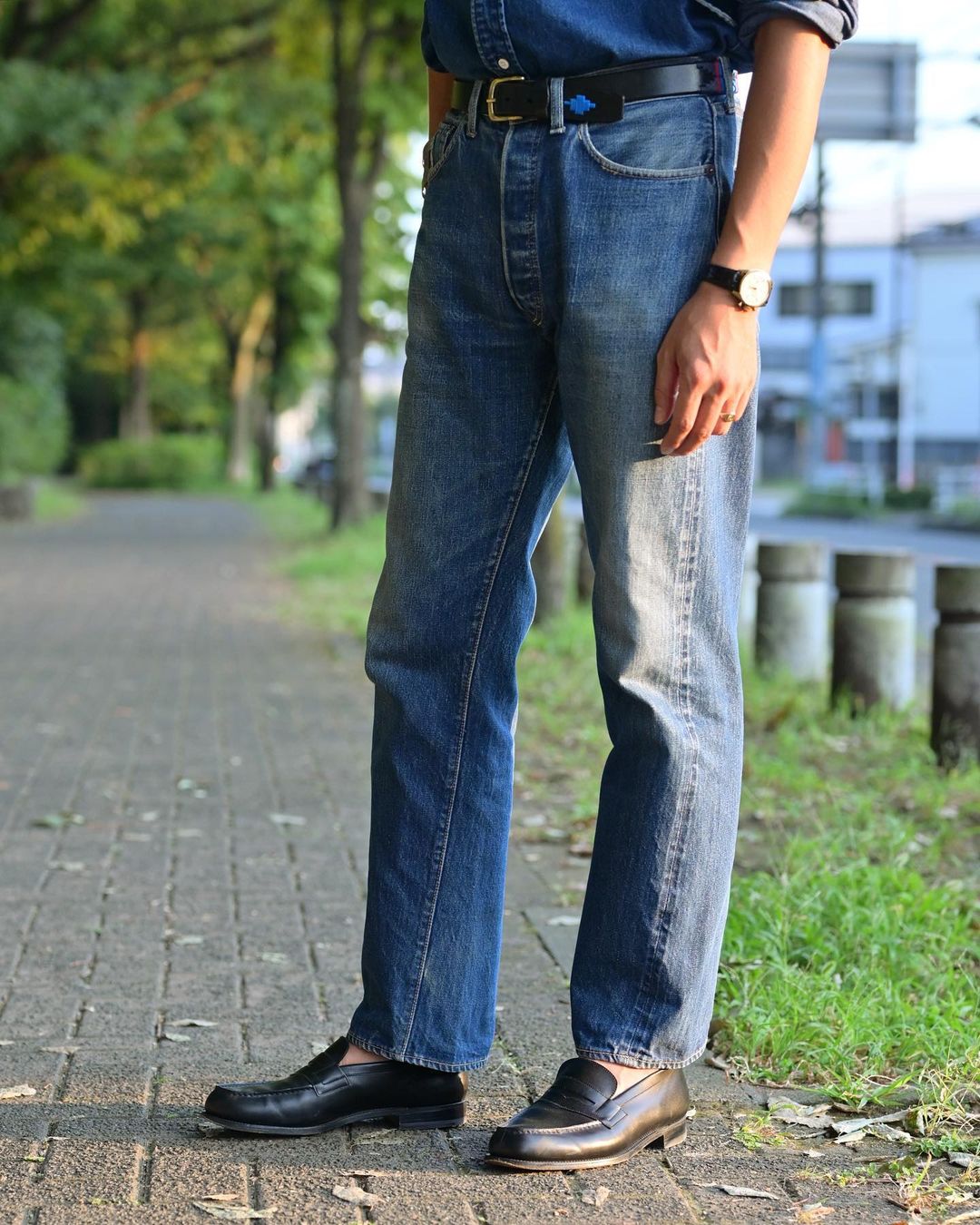
Denims are denim pants. You’ve got most likely heard of them. Nicely, the time period is just a little obscure, carrying just a few totally different implications, however “denim” and “pants” are fairly heavy implications amongst them.
Whereas “denims” and “denim” are generally used synonymously, with some folks referring to denim jackets as “jean jackets,” the phrase “denim” unambiguously refers back to the cloth, and the time period “Denims” simply kind of… closely implies denim pants. It is bizarre.
Extra particularly, denims are often five-pocket pants—pants in a format with two pockets on the again, two curved pockets on the entrance, and a tiny little coin pocket inside the fitting entrance pocket. This poket format is distinct from the everyday slant pocket format, which you may know from sweatpants, or costume pants, or most different pants, as a result of the 5 pocket format kinda sucks, apart from sure use circumstances the place your legs transfer in sure methods, and issues fall out of slant pockets.
5 pocket pants often include belt loops, steel buttons, rivets, and a fake leather-based or leather-based patch on the again proper, generally with a model brand on it. Levi’s famously makes use of a really small purple tag with its model identify connected to a rear pocket.
Rivets are notably vital to the historical past of denim denims—they have been a part of the unique innovation that made Levi Strauss & Co. an enormous deal. Jacob Davis had been shopping for numerous denim cloth from Levi Strauss, and had discovered that his prospects have been utilizing it for repairs, so he thought to make use of brass rivets to strengthen stress factors. The two men obtained a patent in 1873, and closely featured the rivets of their early promoting.
Apart from match, really feel, weight, and shade of blue, most denims are fairly related. You possibly can determine particulars, like sew colours (often gold), whether or not you desire a button fly or a zipper fly, particulars in regards to the again leather-based patch (some manufacturers are utilizing numerous sorts of vegan patches there, however you gotta have one thing there), what steel to make use of for buttons and rivets… However you are principally particulars.
“Denims” get their identify from Genoa, Italy. They have been not initially made from denim, however fustian. Denim was initially a French try at a copycat cloth for denims. Type of an Oreo-Hydrox scenario. Bizarre. The phrase “denims” lately fairly persistently means denim, or at the least a coloured denim-like twill.
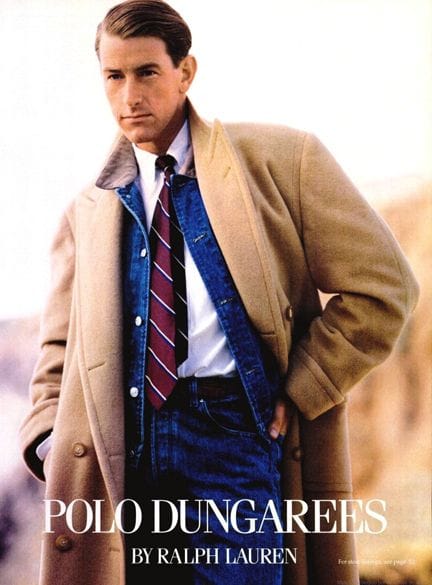
Some folks consult with denims as “dungarees,” which initially referred to a special cloth referred to as “dongri,” named after a suburb of Mumbai. Some folks have steered to me that “dungarees” particularly refers to a sure type of flared pants utilized by the US Navy, made from denim, with two entrance patch pockets.
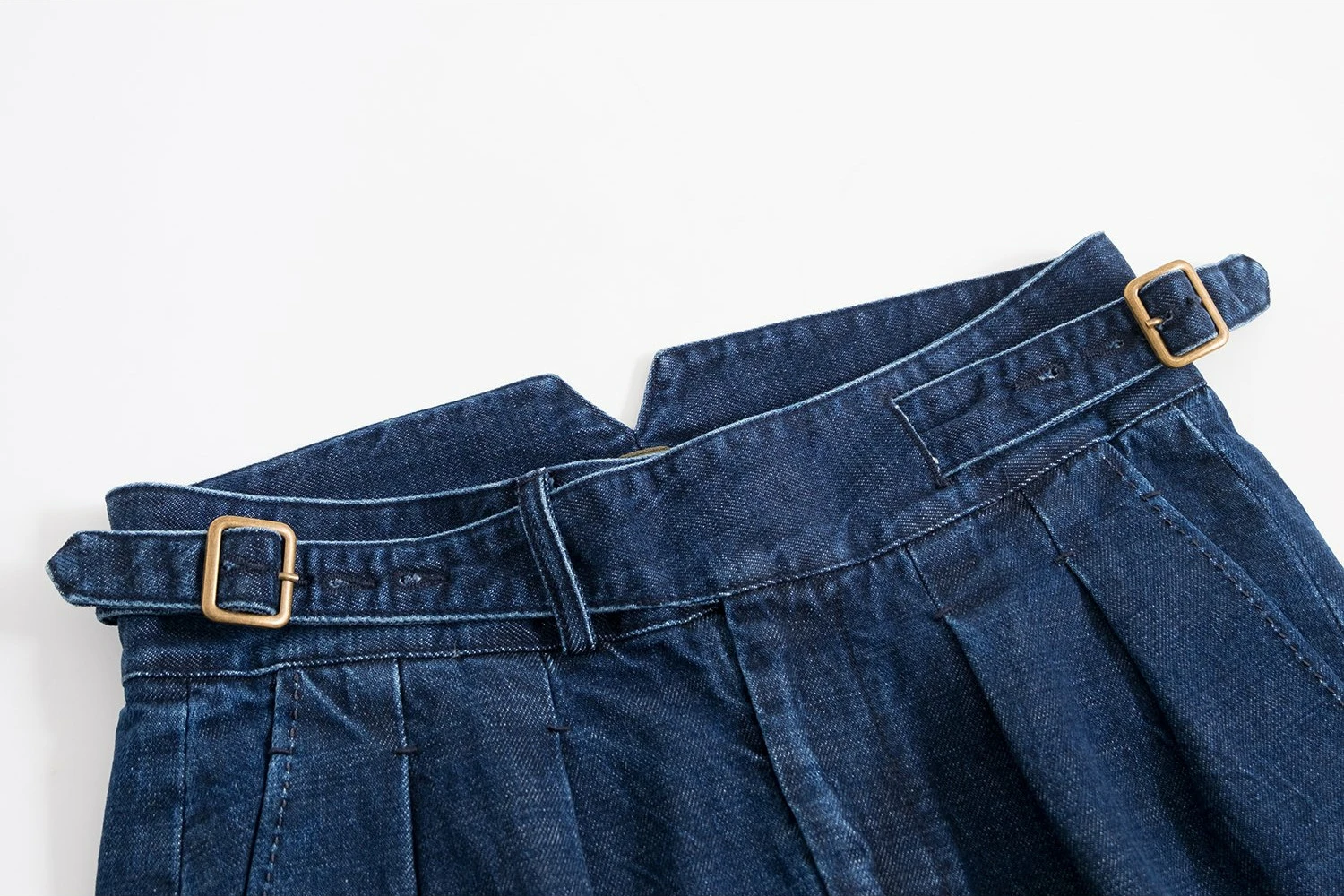
That mentioned, you are able to do plenty of bizarre issues with denim. You possibly can have slant pocket denim, pleated denim, even creased denim pants. You possibly can alternate the belt loops for a belt again, an prolonged waistband, facet tabs, or perhaps a ghurka-style waistband. You can also make USN flares like I described above. You can also make fatigues, double-knee pants, painter’s pants, cargo pants, or—heaven forbid—shorts out of denim. I condemn jorts in all contexts. (probably not, you do you).
In fact, you too can play with the material you employ for a pair of denims. you should utilize coloured twills, distressed materials or distresed clothes, uncooked, washed, sashiko, boro, no matter. We’ll get into these phrases, don’t be concerned.
Oh, by the way in which, measurements / sizing is about the identical as with every pair of pants, often in a Waist/inseam measurement. For instance, a 34/32 would have a 34 inch waist and a 32 inch inseam. Widespread measurements:
- Waist measures the circumference (or generally the width) of the waistband of the pants. A dimension label is not often a mesuremen—one thing labeled dimension 32 may need a 35 inch circumference (or a 17.5 inch width). That is generally referred to as “vainness sizing”—it’d make you suppose you are three inches skinnier than you might be.
- Inseam refers back to the seam on the within, from the crotch to the hem—the size of the leg. Some folks put on their denims with an extended inseam in order that it may possibly stack up.
- “Stacking” is a time period notably used to consult with the way in which slim, lengthy denims ripple on the decrease leg; that is distinct time period from “break,” which is a time period used for the way in which costume pants work together with the shoe. It isn’t mistaken to explain a pair of denims as “breaking” on a shoe, if that is what they’re doing, but it surely’s not the norm.
- Rise refers back to the distance from the waistband to the crotch seam nexus. Yeah, I suppose I will simply depart the phrase “crotch seam nexus” there. Anyway, “excessive rise” or “excessive waisted” pants sit greater on the physique. Denim is extra typically seen in a decrease rise than costume pants, however there are nonetheless a variety of rises that may work properly relying on the outfit. I discover the 5 pocket format particularly problematic on excessive rise pants, since I can not comfortably sit down with my cellphone in my pocket, however which may not be an issue for you.
- Hem opening is the width of every pant ankle on the hem. It is a comparatively good solution to gauge how relaxed the pants match… besides they’ll nonetheless be slim and flared or large and tapered, so you may additionally wish to know the knee width, or to see a photograph… or you may simply strive the pants on. Bootcut denims often flare out barely on the hem in order that they’ll match comfortably round boots.
If you happen to see a quantity someplace within the vary of 501 to 569, it is probably a selected reference to Levi’s various fits, every of which include a code quantity. Levi’s 501s are absolute classics… besides they’ve modified the form of the 501s a number of occasions over time, so… idk, the world is a bizarre place. Levi’s denims are so ubiquitous that you just may generally even hear folks describe the match of non-Levi’s denims through the use of Levi’s quantity codes—though that is a reasonably foolish solution to speak.
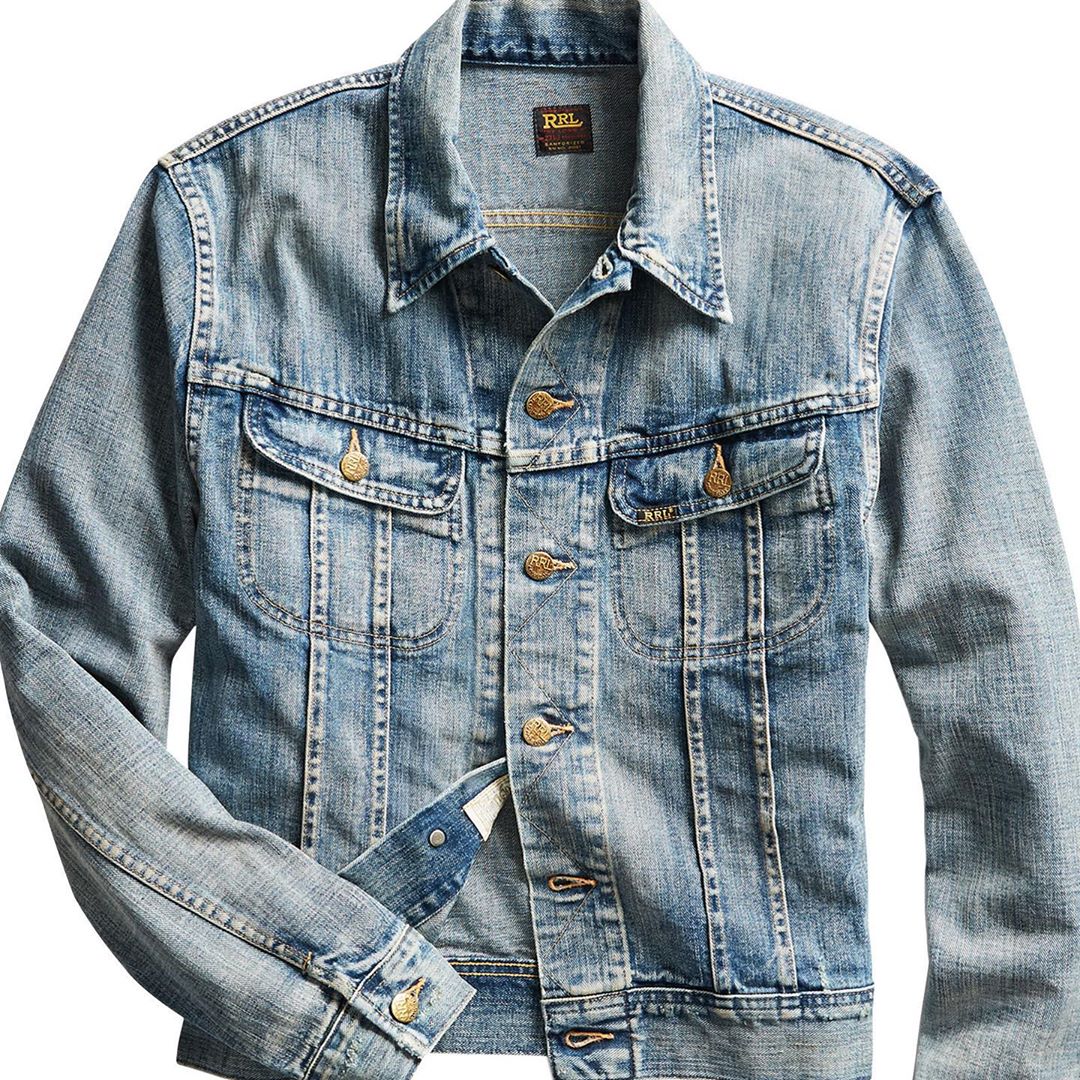
As with denim pants, there’s a default format you may anticipate a denim jacket to return in. Then once more, as with denim pants, you can also make any type of jacket in denim, some will simply make extra sense than others.
The traditional denim jacket is a trucker jacket, a brief factor with many strips of cloth, a selected pocket format, and steel buttons. You realize what I am speaking about, proper? Nicely, there are totally different types of trucker jacket; once more, Levi’s pioneered the Kind I, Kind II, and Kind III trucker jackets, however we’ll additionally speak in regards to the Lee 101J, 220J, and Storm Rider jackets beneath. The trucker jackets you are used to are all based mostly on the Kind III and 101J types.
These early denim jackets have been reduce brief sufficient for truckers to put on once they have to sit down all day with out sitting on their jackets, therefore the identify “Trucker Jacket.”
Typically a denim trucker jacket is perhaps lined with fake shearling or “sherpa” lining. True shearling is a leather-based materials, although, so you actually would not see any person cowl that up with denim, that is not a factor… until you wish to do a real shearling trucker and neglect the denim altogether. Some jackets simply use fake shearling on the collar slightly than lining the entire physique.
Different trucker jackets may use blanket lining which is to say, a material lining materials that’s type of kind of like a blanket. This provides some heat and coziness; the reverse facet of denim is often about as cozy because the entrance, which is to say, not very. Blanket linings often have some type of sample. You will know them if you see them.
All that mentioned, you can also make any jacket type out of denim. A blouson, chore coat, bomber, parka, overcoat, blazer… Does a denim blazer make sense? Nicely… if you would like one, sure. I suppose.
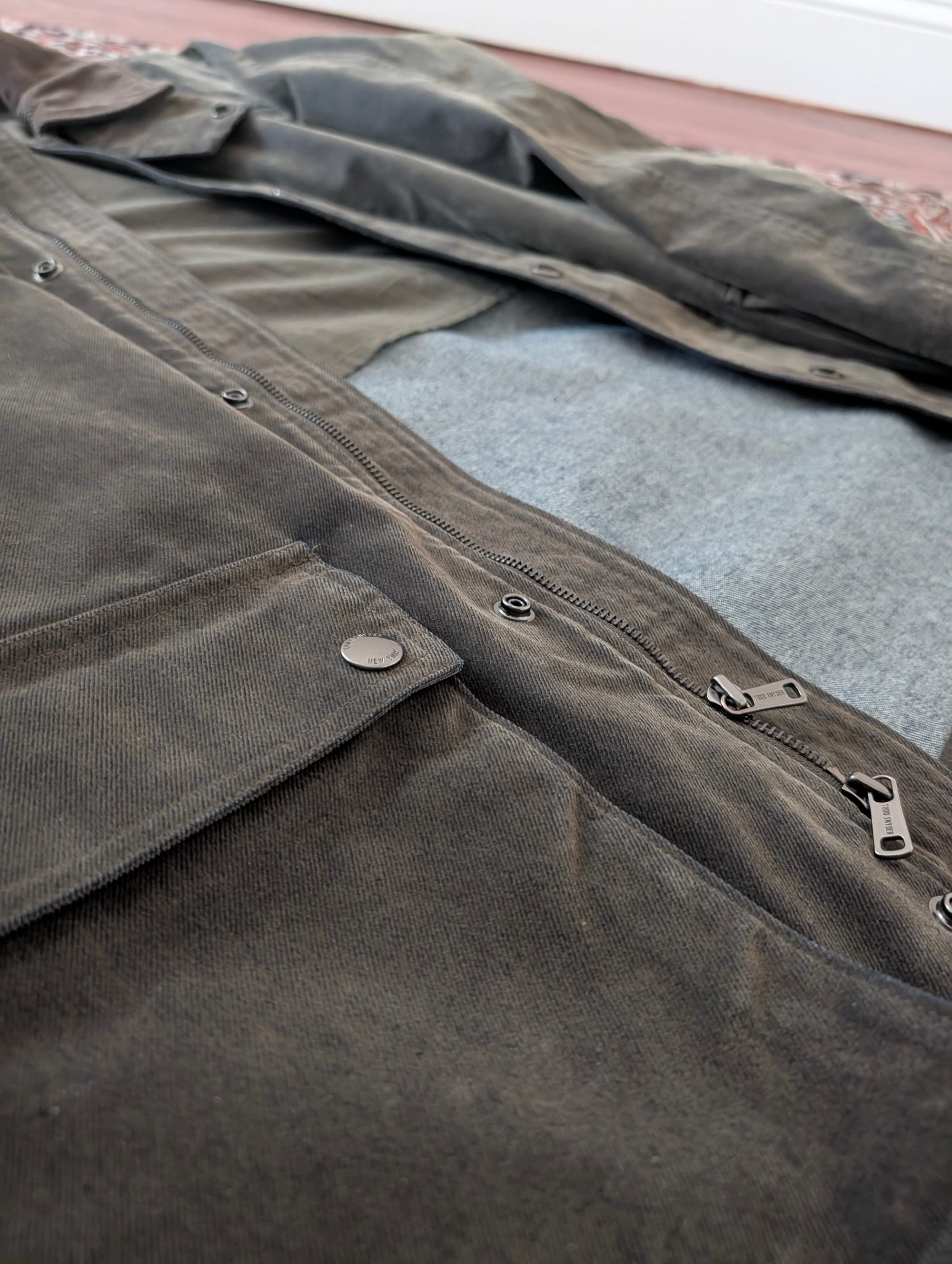
For that amtter, a trucker jacket might be made from something. Todd Snyder does them in suede.
Anyway, to interrupt down the traditional types of trucker jacket:
- Levi’s, historical past principally from Stridewise
- Kind I (c. 1900): outlined by a single pocket on the entrance left, a buckle within the again for cinching, and pleated entrance close to the buttoning. Lower brief, however, in contrast to most types of trucker jacket, a Kind I is often reduce unfastened within the physique. Since 1936, the sort 1 (and each different chest pocket on a trucker jacket) has had a pocket flap and button; earlier than then, the pocket was only a patch on the chest.
- Kind II (c. 1953): launched the second chest pocket. The buckle on the again is changed by two-button facet adjusters on the hem of the jacket. The jacket is reduce slimmer and never fairly as brief.
- Kind III (c. 1967): the picture of a denim jacket in your head. Has two seams that run over every chest pocket making a V form. Not has the entrance pleats. The reduce is just a little longer and just a little slimmer nonetheless, though nonetheless pretty brief.
- Lee, here is an unreasonably detailed guide to every minor change in these jackets over time. These are usually known as “rider” jackets, as they have been meant for cowboys, who, like truckers, did plenty of sitting.
- 101J: the unique 101J was nearer to a Kind I, however in 1948, they modified the type. Just like the Kind III, the sooner 101J has just a few key variations: the pockets are angled and curved in several methods, and as an alternative of V-shaped, you see two straight vertical seams.
- 220J (Seventies): Principally simply the 101J with facet pockets.
- Storm Rider, a.ok.a. the 101L: based mostly on the 101J, however now features a corduroy collar and blanket lining for heat. Might or might not have facet pockets.
A few of these are denim jackets. A few of these are trucker jackets. A few of these are denim trucker jackets. Are you able to inform which is which?
Jack Lord; Oscar Isaac; Me
As mentioned, light-weight denims are often round 12 oz. Typical shirting materials are lower than half that weight. Twill shirts are widespread, so why not, say, a 5 oz. denim shirt? Or… why not a 12 oz. denim shirt?
Denim shirts create an attention-grabbing impact. Whereas denims match into almost each wardrobe, denim shirts are a aware alternative. Possibly you simply desire a darkish blue textured shirt, however most frequently, if you would like a denim shirt, you need workwear or western particulars. There may be some overlap between these vibes, however I will talk about them as distinct.
Workwear particulars would primarily be: two chest pockets with horizontal flaps. You may additionally see a sure type of distinction stitching on the buttonholes. You may want a comparatively heavy cloth you may put on down, as a result of the vibe you are going for goes to be rooted in the way in which denim ages: such as you did onerous labor in it. Just like the shirt has a narrative to inform.
Western shirts are just a little extra attention-grabbing, in the event you ask me. I would suggest a darkish denim with noticeable gold stitching, chevrons wherever they match, pearl snap buttons, two sawtooth chest pockets. A longish level collar. Nonetheless a heavy cloth. Yeah, okay, I’ve received a really specific concept in my head.
Once more, chambray and denim are two utterly totally different weaves. Nonetheless, plenty of manufacturers on the market, inexplicably, discuss “denim chambray” shirts or use the phrases interchangably. They aren’t interchangable. Even at equal weights and in related shades, denim and chambray ought to really feel totally different and age in another way.
That mentioned… you want chambray shirts. They are very good shirts.


My classic denim western shirt (left) is heavy and drapey, and has worn in to be extremely delicate. My chambray button down (proper) is gentle and ethereal.
Ugh, I do not actually wish to write this part.
Overalls have been round for some time, however the early historical past is hazy. They have been used as work clothes (and sure particularly for slaves) within the 1700s, if not sooner. However none of that is clear, as a result of the time period was additionally used to consult with outerwear (which truly is smart) and all kinds of different clothes. Some early Levi’s patents refer to overalls, however these have been usually extra just like pants; some included the suspenders, however not the “bib,” which is to say, not the torso-covering portion. Some have been type of simply over-pants. They referred to as these “waist overalls.”
Anyway, Henry David Lee, founding father of Lee Denims, seems to have been the inventor of “bib” overalls. Carhartt additionally made some pairs early on, however Lee obtained the primary patent. There’s additionally some proof that early overalls had a detachable bib, however Lee’s bib was constructed into the garment.
For some cause, jumpsuits aren’t referred to as overalls. That is bizarre, is not it? You possibly can put on a jumpsuit over all of your… nevermind.
Overalls have been, for a really giant portion of historical past, used as sensible workwear. Accordingly, the widespread cultural picture of them isn’t solely informal, however low-class; they have been related, after slavery, with sharecroppers, poor white farmers, railroad staff, and different bodily laborers. These particular connotations have dissipated considerably, however the extra basic connotation that they’re garments for poor laborers nonetheless holds. Unusually, in contrast to denims, double knee pants, barn jackets, and different workwear, overalls have been by no means totally adopted by white collar staff or different workwear-loving metropolis bros.
That mentioned, overalls have made some cultural impression outdoors of the true workwear context, with occasional tendencies within the 70s, 90s and 2010s. No, I am not pulling up receipts, use google if you wish to see Will Smith or the younger Olsen Twins in overalls.
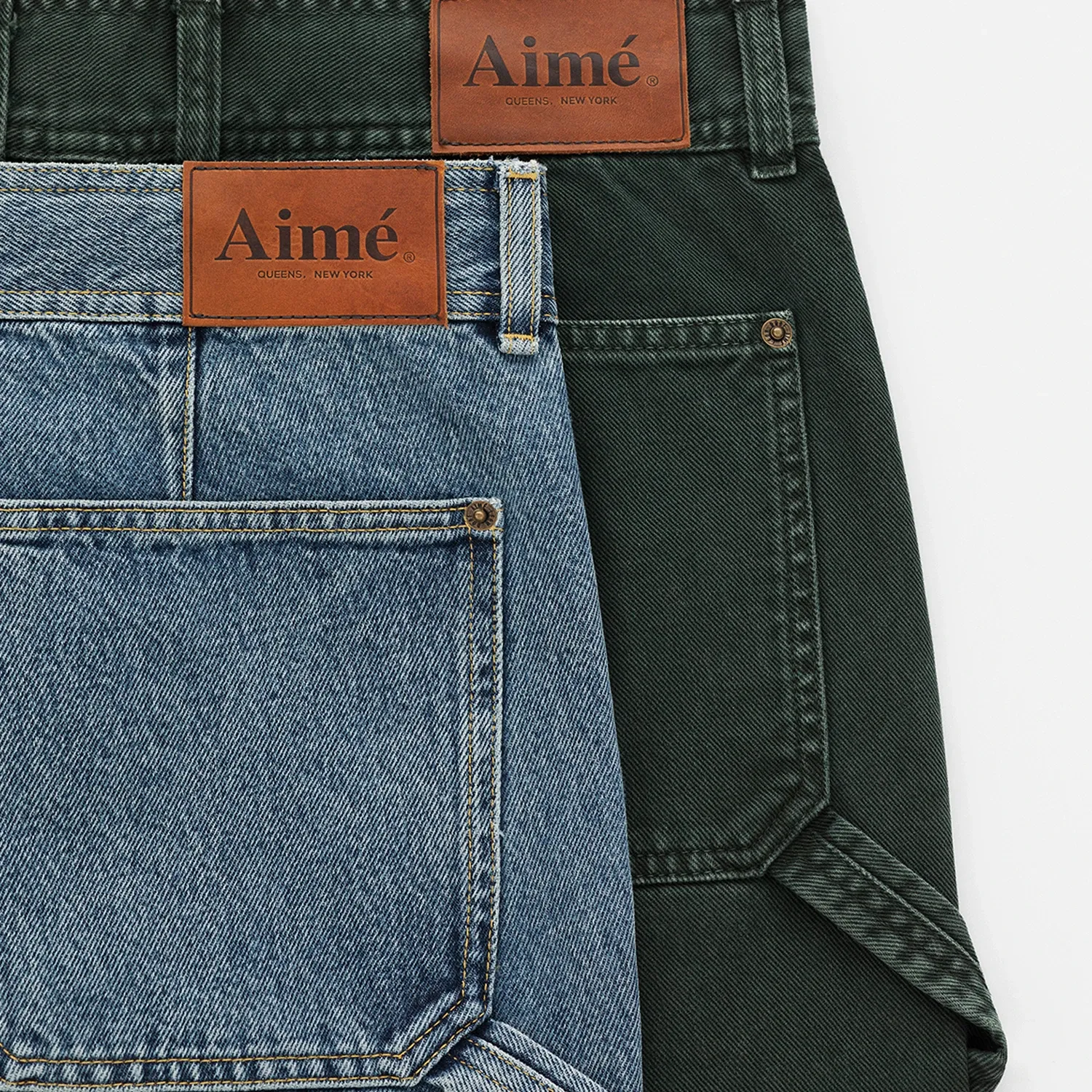
The primary “embellisment” to debate is shade. Denim might be darker or lighter, theoretically because of washing. However there are 100 tangible and intangible components that may change the precise shade of blue. What dye did you employ? How a lot, and for the way lengthy? Did you do any distressing? How absorbent is the actual cotton you are utilizing? What was the air stress the place the material was dyed?
As I discussed above, rivets have been initially used to strengthen seams and different stress factors. They’ve additionally turn into an iconic a part of how denim is styled. Most denims and trucker jackets additionally use steel buttons, and denims nearly at all times have leather-based or faux-leather patches on the again.
Keep in mind once I talked about coloured twills above? These incldue black and white twills, black-and-white weaves, garment dyed twills… The inexperienced twill from Aimé Leon Dore above, my purple-and-white 501s, and people brilliant orange uncooked Levi’s I noticed in a TJ Maxx as soon as. Technically, none of these sorts of twill are Denim. The picture above demonstrates why that is an imporatant line to attract. There’s nothing mistaken with inexperienced twill, but it surely does not match the identical area of interest that true blue-and-white denim covers. It does not carry the historical past or cultural cache of denim. It does not carry the identical versatility. Must you get inexperienced twill pants? Certain, if you would like them. Simply know the distinction.
Furthermore, denim is perhaps overdyed—both deliberately dyed too lengthy, or dyed a second time on prime of the unique dye to create a mixture of two totally different tones, which could fade in another way.
Distressing is an umbrella time period for simulated put on and tear. Some distressing is considerably refined—stone washing, for instance, may solely trigger a small quantity of abrasion—whereas different distressing may contain big holes torn within the denims. Typically, there’s some type of faux-fraying, I am probably not positive how they do this, however there is not any precise gap, the principle cloth is not frayed, it is similar to… a layer of fraying added on prime. Usually, this growing old is a really poor facsimile of the way in which denim naturally ages—as mentioned beneath.
There is perhaps any number of designs printed on prime of denim—I believe these are usually unhealthy. I discussed trompe l’oeil “denim” above, however you may even have actual denim with trompe l’oeil faux-distressing, like a pretend ripped knee the place the knee is not truly ripped.
You may additionally add some patches on prime of denim. Boro refers to a Japanese type of patchwork which frequently entails seen patchwork with totally different denim materials. Sashiko refers back to the Japanese artwork of seen white needlework. Collectively, they contribute to a mindset of embracing seen restore. The concept is that mended clothes is extra particular as a result of it has been worn, and liked, and restored, slightly than discarded. It reveals your appreciation for garment. That mentioned, Boro and Sashiko are each used on new clothes as properly, generally to represent that spirit of restore, however typically simply to make fairly designs.
One different factor I believe is cool is a uncooked hem. That’s to say, a hem that is not sewn up correctly on the finish, so it visibly frays. Ethan M. Wrong writes about raw hems here.
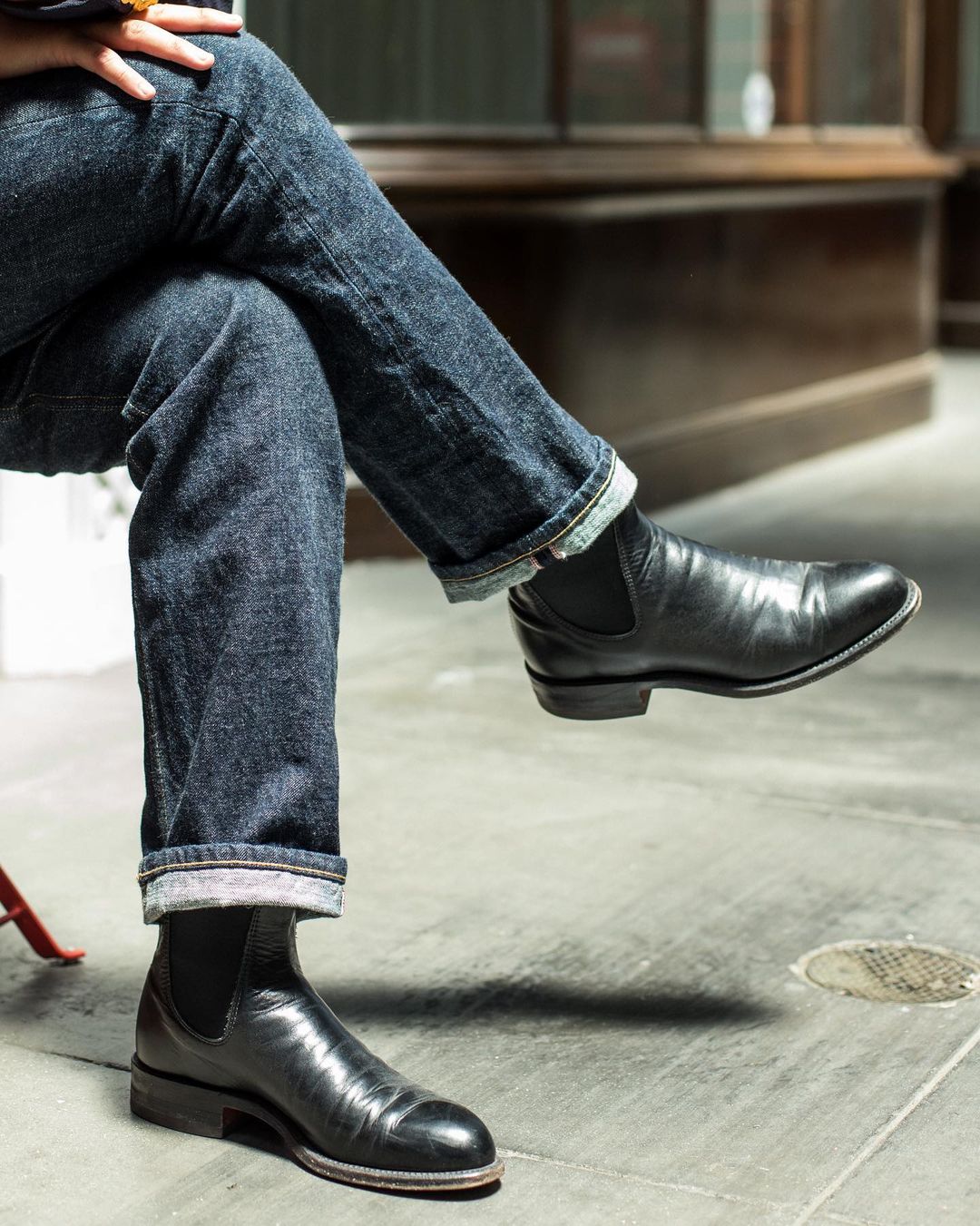
Some folks deliberately depart their hems too lengthy after which cuff their denims—roll or fold them up on the hem. That is totally different from cuffed costume pants—with costume pants, you sew the cuff in place very neatly, however with denims, you simply roll them up.
Some folks deliberately depart their hems too lengthy after which step throughout them. This causes the hems to type of appear to be uncooked hems, however uneven. Broken. They name that “heel chunk.” That is… I am undecided why that is a factor, however it’s.

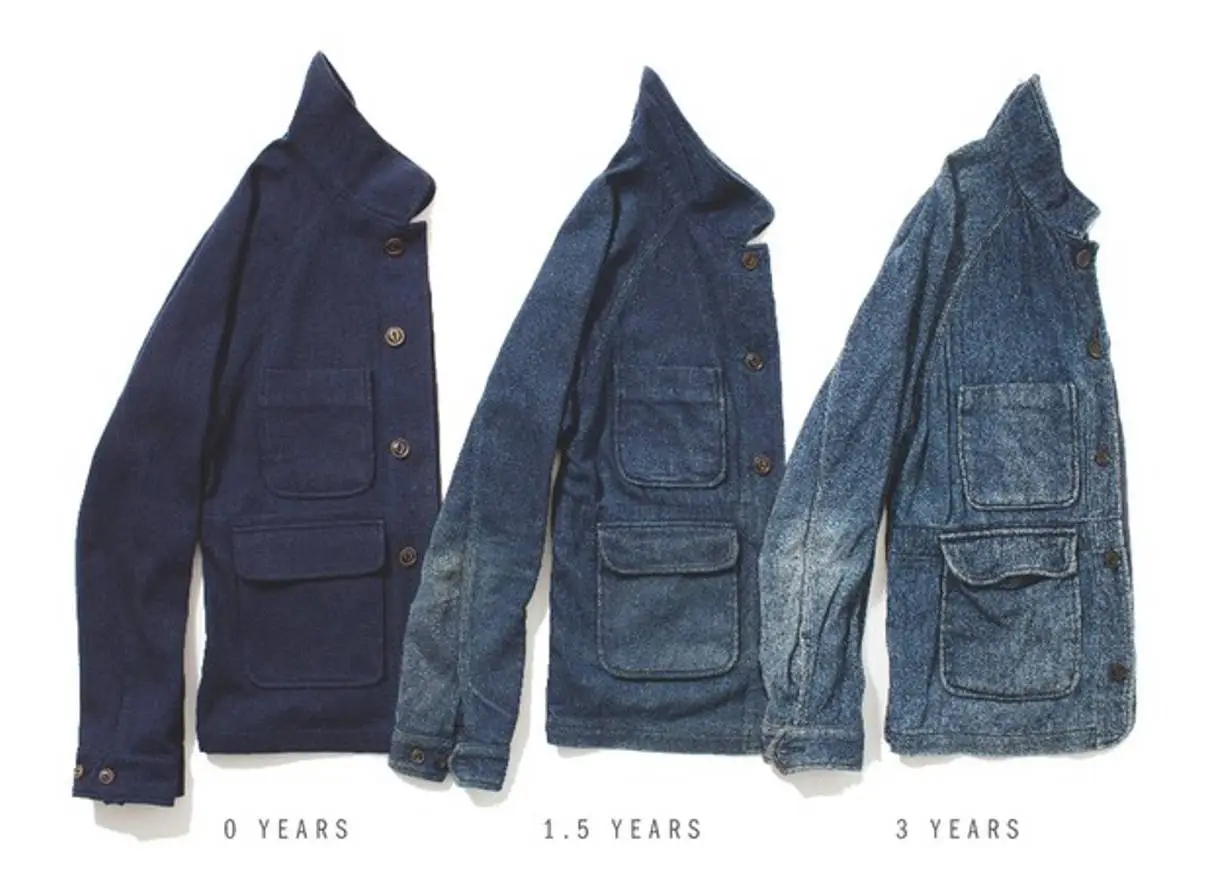
Ah, right here we’re. Denim’s saving grace, actually. Whereas stretchy pants sag, chino and seersucker and linen wrinkle, denim—notably good, hardy denim—ages slowly and beneficial properties character over time.
Good denim may soften over time. If you happen to purchased a pair the web beneficial on-line, you may need truly been disenchanted within the orignal… hardness of the material. Nonetheless, in the event you’ve worn it day in and time out—as /r/rawdenim may encourage—it’d finally put on down in simply the way in which you need it to. A part of the enchantment of heavy, high-quality uncooked denim is that it’s constructed to final lengthy sufficient for that to occur. Shockingly, some members in /r/rawdenim will even declare that their denims are comfy. Are you able to think about?
Denim additionally fades. Extra particularly, indigo bleeds, and plenty of dyes on the whole fade out of cotton. Washed denim may fade slowly, and the model that made it may need used any variety of strategies to maintain that fading sluggish, however uncooked denim will bleed indigo and fade continually over its lifespan. Observe that this can’t solely be an issue within the wash, however like… in the event you’re sitting on a pleasant sofa. Whoops, received some indigo in your sofa.
Extra curiously, denim fades in particular patterns based mostly on the methods it’s worn and used. If you sit down, the material scrunches on the components the place your legs bend. A few of the indigo popping out of some fibers successfully dyes different fibers. The denims present patterned traces like whiskers or honeycombs, that match exactly to your physique and the methods you progress. This makes a pair that you have worn private and distinctive to you. Is that cool? Denim guys suppose so. Typically, denim guys will simply gush over a well-faded pair, saying “the fades!” like meaning one thing.
I’ve spoken quite a bit about how denim ages. So what occurs if you make investments just a few years in your life in getting excellent fades, softening up a pair of stiff, heavy, uncooked denim till it is simply excellent… after which it riips! Nicely, as a result of folks develop connected to their denims, there are fairly just a few artwork kinds constructed round repairing them. Restore is widely known as each a sustainable observe and a show of the dedication an individual can have to purchasing much less and shopping for higher.
Primarily, there are two classes of denim restore: patching and reweaving / darning.
Patchwork is the method of utilizing a patch, both on the face or referse of the denim, to cowl a gap. patchwork is at the least considerably seen, however straightforward and low-cost, even for giant tears. It will also be a great way to point out that your denim has aged properly. Boro, which I described above, is the Japanese artwork of deliberately seen patchwork, however you may definitely use a much less seen patch that matches the material close to it.
Darning and reweaving might be finished in an “invisible” manner, however might be dearer or troublesome (particularly for giant holes). Reweaving may let you lengthen a hem or do just a few different issues patchwork is not actually suited to. Material is perhaps just a little stiff after a recent darning. Sashiko could also be used to make these repairs seen. Another artisans may use embroidery for different kinds of seen mending, leaving your denims with a cute little flower the place there was as soon as a gap.
Derek Man put collectively a great twitter thread on repairing denim.
Affordable; Osaka 5; Mid-Market; High-End;
Let it first be mentioned that you need to thrift. Here’s a guide for thrifting Levi’s. Here’s a guide for thrifting Wrangler. However a few of you wish to purchase denim new.
It is a difficult one. Usually talking… You shouldn’t spend some huge cash on denim. The manufacturers you have heard of all have huge scale that enables them to make use of comparatively good cotton to make a comparatively low-cost product.
The flamboyant Japanese manufacturers that cost, like, $2-400 for a pair of denims are type of simply… unhealthy values. As I discussed above, selvedge denim doesn’t imply greater high quality, it principally simply means it is dearer to supply. Slubs are enjoyable, however they’re imperfections, and it isn’t onerous to copy these imperfections on projectile looms. Numerous these manufacturers are spending more money to breed Fifties particulars, however these particulars are issues that we have improved because the Fifties, so it is type of simply replica for the sake of replica, however decrease high quality. If you happen to’re into that, I’ve suggestions. However are you actually into that? Most individuals aren’t.
A very powerful issues about your denims can be how they match, how the fabric appears to be like, how the fabric feels, and the way lengthy the fabric will final. There are development particulars that enhance longevity, however half the allure of good denim is sporting it in and seeing the way it ages with you and possibly even patching it; if you would like a pair that may keep darkish and uniform eternally, you aren’t a denim head.
So… I am principally going to suggest cheaper manufacturers right here. If you happen to’ve been following me for some time, you will know that I’m not shy about recommending good issues, even when they’re costly. But when I do not suppose there is a level, I am not going to let you know to waste your cash. I will point out dearer manufacturers too, however you needn’t run to them until a budget manufacturers fail you.
If you wish to examine high quality and development intimately, think about visiting Rewoven, this man is sweet at that kind of factor. However I mentioned this with him, and it is simply… good denim is unhealthy, unhealthy denim is sweet, and high quality is a wierd beast.
A few of the hyperlinks beneath are affiliate hyperlinks.
Reasonably priced / Worth Denim
- Levi’s is an efficient place to get denims in the event you’re based mostly within the US. Sure, they’ve 100% cotton choices, they’ve an entire filter’s price of them, the elastene-everything second has handed. Additionally they make some dearer denim:
- Wrangler. “Inflexible” means uncooked.
- Apparently, Wrangler’s Rustler diffusion line, with pairs starting from $15-20, is beneficial as, weirdly, very top quality. I can not communicate to their labor requirements, although… at these costs… they would not be good.
- Most of what’s carried at Olderbest. It is a basic class of Chinese language manufacturers that initially offered on aliexpress however received consideration for not sucking, or truly being fairly good.
- Red Tornado is one other a type of Chinese language manufacturers, as I perceive it, however they promote on Amazon. The costs are considerably greater, however hey, they promote on to US consumers right here, and have all kinds of denim merchandise.
- The Unbranded Brand. A very good worth choice for respectable uncooked denim. Unbranded is a subsidiary of Bare & Well-known.
Osaka 5
These 5 manufacturers are traditionally vital in Japanese denim. Read more about it at Heddels. But once more, bear in mind: selvedge denim isn’t extra sturdy. It’s thought of higher partly as a result of it is much less cost-efficient, much less excellent, and extra like old school denim, not for any sensible profit.
Some denim and denim-adjacent stuff I personal and put on.
Mid-Market Choices
These manufacturers is perhaps mid-market when it comes to worth, however they’re particular ultimately I’m type of vaguely conscious of. Most, however not all, of those choices are uncooked denim. Most, however not all, of those choices are both Japanese manufacturers or manufacturers utilizing denim woven in Japan. Some are devoted to devoted reproductions. Some are extra modern. Some are top quality. The Raw Denim subreddit has spotlight threads on many of these brands.
- Naked & Famous.
- Nudie
- 3Sixteen. I favor the RS reduce.
- RRL is Ralph Lauren’s westernwear-focused label, and is usually thought of to be fairly superior.
- Buck Mason. Their full saddle cut is actually good.
- Blue Blue is doing cool issues in Japan. Arduous to purchase within the US. I’ve a pair of “jacquard denim” pants from them that… it looks as if they are not obtainable this season, however they’re excellent.
- Frame is legendary for its denim for causes I do not actually perceive.
- Rag & Bone can be well-known for its denim. I’ve this tencel-blend overshirt I actually like. I usually tuck it in and simply put on it like a standard shirt.
- Freenote Cloth makes actually cool garments within the US.
- So does imogene + willie
- And so does Left Field. If you need American Denim, we nonetheless have it, it is simply not the most cost effective mass-produced factor in the marketplace. Do not say it does not exist.
Excessive-Finish / Designer / Distinctive Denim
These manufacturers supply just a little one thing else past mere high quality—particular designs in boro or sashiko, distinctive silhouettes, and different options that you just simply will not get anyplace else.
- Studio Nicholson for distinctive silhouettes. Not as costly as some choices right here.
- Kapital. Sashiko, boro, and their well-known “century denim” (see at Blue in Green, Haven, Mr. Porter).
- Visvim, additionally identified for sashiko and boro, for uncommon footwear, and for John Mayer’s everlasting love.
- I am not an entire fan of the entire trompe-l’oeil second, however plenty of designer manufacturers
- Khaite is a ladies’s model identified for its denim. I do not know rather more than that.
- idk, I noticed these jeans at Louis Vuitton some time again, they’re kinda cool. is the worth wise? no. no matter. I suppose that is the purpose of this part?
Did I miss one thing?
I attempt to make these guides… exhaustive, I suppose. If I missed one thing, please let me know. If not… wow, I did a fantastic job, possibly you need to go share this text.
Severely, although, I spent an completely unjustifiable period of time on this text. It could imply the world to me in the event you would share, subscribe, or in any other case present your assist. Thanks for studying no matter portion of this you learn. And please, do not let me do one other one in every of these guides.